
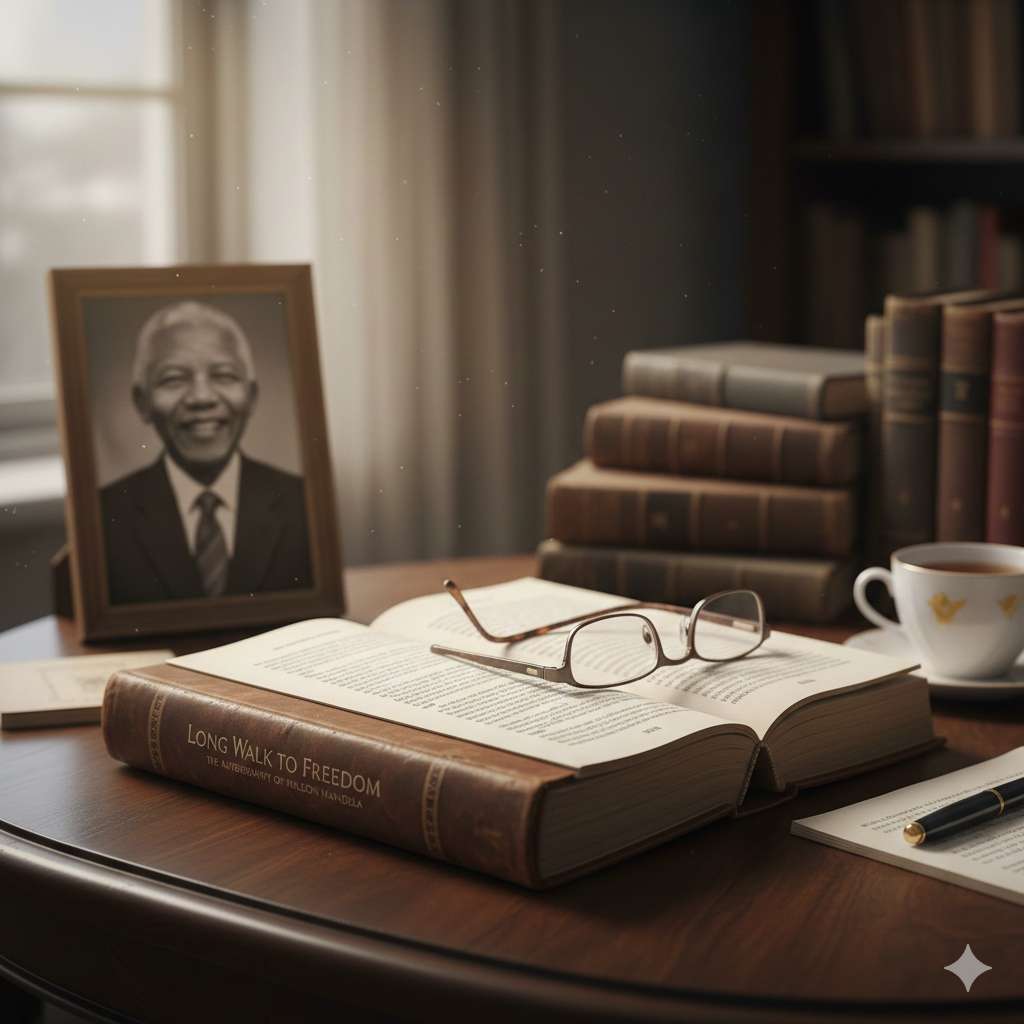
Nelson Mandela Biography: Life, Struggle, and Legacy of a Global Icon
Nelson Mandela remains one of the most respected and inspirational leaders in world history. Known for his unwavering commitment to justice, equality, and peace, Mandela played a crucial role in ending apartheid in South Africa and uniting a deeply divided nation. His life story is a powerful example of courage, sacrifice, and forgiveness. This Nelson Mandela biography explores his early life, political journey, imprisonment, presidency, and lasting global legacy.
Early Life and Education
Nelson Rolihlahla Mandela was born on July 18, 1918, in the small village of Mvezo, located in the Eastern Cape of South Africa. He belonged to the Thembu royal family and was given the name “Rolihlahla,” which loosely translates to “pulling the branch of a tree” or “troublemaker.” The name would later seem symbolic of his role in challenging an unjust system.
Mandela’s father, Gadla Henry Mphakanyiswa, was a local chief and counselor to the Thembu king. After his father’s death, Mandela was placed under the guardianship of Chief Jongintaba Dalindyebo, who ensured that he received a quality education. Mandela attended Clarkebury Boarding Institute, Healdtown, and later enrolled at the University of Fort Hare, one of the few institutions available to Black South Africans at the time.
At Fort Hare, Mandela began to develop his political awareness. However, he was expelled for participating in a student protest. He later moved to Johannesburg, where he worked various jobs and completed his law degree through the University of South Africa (UNISA).
Introduction to Politics and the African National Congress
While living in Johannesburg, Nelson Mandela became increasingly aware of the racial discrimination and inequality faced by Black South Africans under the apartheid system. Apartheid was a government-enforced policy of racial segregation that denied non-white citizens basic human rights.
In 1944, Mandela joined the African National Congress (ANC), a political organization fighting against racial oppression. Along with other young leaders, including Oliver Tambo and Walter Sisulu, he co-founded the ANC Youth League. The group aimed to transform the ANC into a more active and militant organization capable of challenging apartheid laws.
Mandela soon became a prominent figure in anti-apartheid campaigns, organizing protests, strikes, and acts of civil disobedience. He firmly believed in equality and justice, regardless of race.
Legal Career and Growing Resistance
In 1952, Nelson Mandela and Oliver Tambo opened South Africa’s first Black-owned law firm, Mandela & Tambo. The firm provided legal assistance to Black citizens who were often unfairly targeted by apartheid laws. Through his legal work, Mandela witnessed firsthand the deep injustices of the system.
During this period, Mandela led the Defiance Campaign, a nationwide movement encouraging people to peacefully violate unjust laws. As a result of his activism, he was arrested multiple times and banned from public activities by the government.
Despite facing constant surveillance and restrictions, Mandela continued his fight. However, after the Sharpeville Massacre in 1960, where police killed peaceful protesters, Mandela began to believe that peaceful resistance alone was not enough.
Formation of Umkhonto we Sizwe
In response to increasing violence by the apartheid government, Nelson Mandela helped establish Umkhonto we Sizwe (Spear of the Nation) in 1961, the armed wing of the ANC. The organization focused on sabotage of government infrastructure rather than attacks on civilians.
Mandela traveled secretly to gather international support and military training. However, in 1962, he was arrested and charged with conspiracy and sabotage. This marked the beginning of a long and difficult chapter in his life.
Imprisonment on Robben Island
In 1964, Nelson Mandela was sentenced to life imprisonment during the famous Rivonia Trial. In his powerful courtroom speech, he declared that he was prepared to die for the ideal of a free and democratic society.
Mandela spent 27 years in prison, most of them on Robben Island, under harsh and inhumane conditions. Prisoners were forced to perform hard labor, endured isolation, and were denied basic rights. Despite this, Mandela remained resilient and continued to inspire fellow inmates.
During his imprisonment, Mandela became a symbol of resistance and hope across the world. International pressure grew for his release, and global campaigns called for an end to apartheid.
Release from Prison and End of Apartheid
On February 11, 1990, Nelson Mandela was finally released from prison after 27 long years. His release marked a turning point in South African history. Instead of seeking revenge, Mandela called for peace, reconciliation, and unity.
Mandela worked closely with South African President F.W. de Klerk to dismantle apartheid laws and establish democratic reforms. Their efforts led to South Africa’s first multiracial elections in 1994.
Nelson Mandela as President of South Africa
In 1994, Nelson Mandela became South Africa’s first Black president, a historic moment celebrated around the world. His presidency focused on healing the wounds of apartheid and building a united nation.
One of his most significant achievements was the creation of the Truth and Reconciliation Commission (TRC), which allowed victims and perpetrators of apartheid-era crimes to share their experiences. The commission emphasized forgiveness rather than punishment.
Mandela promoted equality, improved access to education and healthcare, and worked to reduce poverty. Despite enormous challenges, he led with humility, compassion, and wisdom.
Nobel Peace Prize and Global Recognition
In 1993, Nelson Mandela and F.W. de Klerk were jointly awarded the Nobel Peace Prize for their efforts to peacefully end apartheid. Mandela also received numerous international honors and awards for his contributions to human rights and social justice.
After serving one term as president, Mandela stepped down in 1999, setting an example of democratic leadership and selflessness.
Personal Life and Values
Nelson Mandela was married three times and had six children. His personal life was often affected by his political struggles, particularly during his long imprisonment. Despite personal hardships, Mandela remained deeply committed to his principles.
He believed strongly in forgiveness, famously stating that holding onto anger was like “drinking poison and hoping it will kill your enemies.” His moral strength and humility made him admired far beyond South Africa.
Death and Lasting Legacy
Nelson Mandela passed away on December 5, 2013, at the age of 95. His death was mourned worldwide, with leaders and citizens alike honoring his extraordinary life.
Mandela’s legacy continues to inspire movements for justice, equality, and peace across the globe. He showed the world that even in the face of extreme oppression, compassion and forgiveness can triumph over hatred.
Conclusion
The biography of Nelson Mandela is more than just the story of a political leader—it is the story of human resilience and moral courage. From a small village in South Africa to the global stage, Mandela dedicated his life to fighting injustice and building a better future for all.



2 Comments