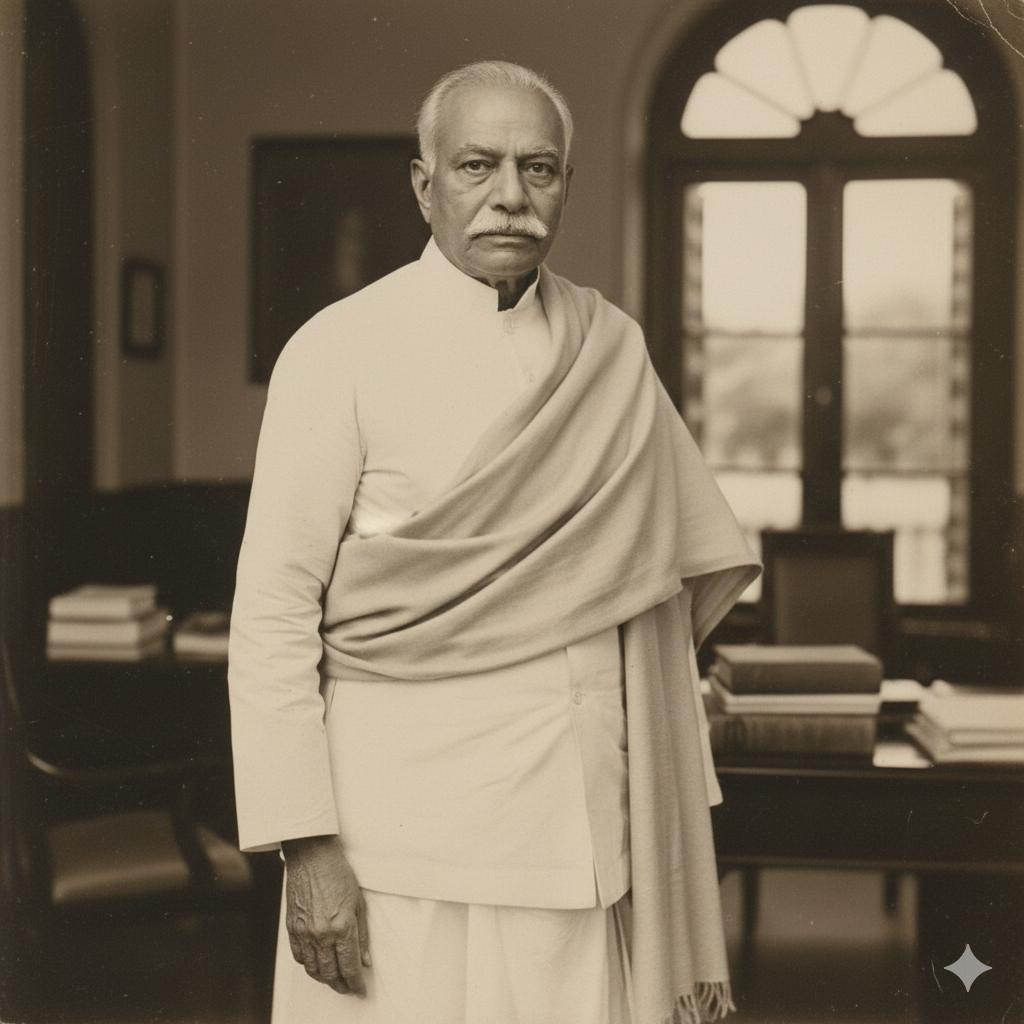
Sardar Vallabhbhai Patel Biography: The Iron Man of India
Sardar Vallabhbhai Patel was one of the most influential leaders in Indian history and a key architect of modern India. Known as the Iron Man of India, he played a decisive role in uniting more than 560 princely states into a single nation after independence. His life was marked by courage, discipline, integrity, and unwavering dedication to national unity. This Sardar Vallabhbhai Patel biography explores his early life, education, political journey, contributions to India’s freedom struggle, and his lasting legacy.
Early Life of Sardar Vallabhbhai Patel
Sardar Vallabhbhai Patel was born on 31 October 1875 in Nadiad, a small town in present-day Gujarat. He belonged to a humble farming family. His father, Jhaverbhai Patel, was a farmer and had served as a soldier in the army of the Queen of Jhansi. His mother, Ladba Devi, was deeply religious and played an important role in shaping his values.
From a young age, Vallabhbhai Patel showed qualities of determination, independence, and leadership. Despite limited financial resources, he was a disciplined student and worked hard to pursue his education. His early life instilled in him the values of simplicity, self-reliance, and service to society.
Education and Early Career
Vallabhbhai Patel completed his early education in Gujarat and later studied law. Unlike many leaders of his time, he did not have a privileged background or foreign education initially. Through sheer determination and self-study, he passed his law examination and began practicing as a lawyer in Godhra and later in Ahmedabad.
Patel was known as a sharp and successful lawyer. His logical thinking, strong argument skills, and fearless attitude earned him great respect in the legal field. At one point, he planned to go to England to study law further, but family responsibilities delayed his plans. Eventually, he went to England in 1910 and completed his law studies with distinction.
Entry into Indian Freedom Struggle
Sardar Vallabhbhai Patel’s life took a decisive turn after meeting Mahatma Gandhi in 1917. Inspired by Gandhi’s principles of truth and non-violence, Patel decided to dedicate himself to the Indian freedom movement.
His first major involvement was in the Kheda Satyagraha (1918), where farmers were struggling due to crop failure and heavy taxes imposed by the British government. Patel emerged as a strong leader, organizing farmers and leading peaceful protests. The movement succeeded, and taxes were suspended, marking Patel’s rise as a mass leader.
Role in Bardoli Satyagraha
One of the most significant events in Sardar Vallabhbhai Patel’s biography is the Bardoli Satyagraha of 1928. Farmers in Bardoli faced unjust tax hikes imposed by the British authorities. Patel led the movement with remarkable discipline and unity.
Under his leadership, farmers refused to pay taxes peacefully. The British government eventually had to withdraw the tax increase. It was after this historic victory that Vallabhbhai Patel earned the title “Sardar,” meaning leader. This movement firmly established him as one of the strongest leaders of the Indian National Congress.
Contribution to the Indian National Congress
Sardar Vallabhbhai Patel was a prominent leader of the Indian National Congress and served as its president in 1931 during the Karachi session. He worked closely with leaders like Mahatma Gandhi, Jawaharlal Nehru, and Rajendra Prasad.
While Patel and Nehru sometimes differed in ideology, Patel always placed national interest above personal views. He was a practical leader who focused on administration, organization, and discipline within the party. His ability to manage people and situations made him indispensable to the Congress leadership.
Role During Quit India Movement
During the Quit India Movement of 1942, Patel played a crucial role despite being imprisoned by the British government. He supported Gandhi’s call for immediate independence and encouraged mass participation in the movement.
Patel spent several years in prison during the freedom struggle. His imprisonment never weakened his resolve. Instead, it strengthened his commitment to achieving freedom and unity for India.
Sardar Vallabhbhai Patel as India’s First Deputy Prime Minister
After India gained independence in 1947, Sardar Vallabhbhai Patel became the first Deputy Prime Minister and Home Minister of India. This phase of his life is one of the most important chapters in Sardar Vallabhbhai Patel’s biography.
At the time of independence, India was divided into British provinces and over 560 princely states, each ruled by local monarchs. Integrating these states into a single nation was a massive challenge. Patel handled this task with extraordinary courage, diplomacy, and firmness.
Integration of Princely States
Sardar Patel’s greatest contribution to modern India was the integration of princely states. Through negotiation, persuasion, and, when necessary, decisive action, he ensured that these states joined the Indian Union.
Notable integrations included Hyderabad, Junagadh, and Jammu & Kashmir. Patel believed that political unity was essential for India’s stability and growth. His strong leadership prevented India from breaking into smaller, weaker regions.
This historic achievement earned him the title “Iron Man of India.”
Administrative Reforms and Nation Building
As Home Minister, Patel laid the foundation of India’s strong administrative system. He played a key role in establishing the Indian Administrative Service (IAS) and the Indian Police Service (IPS), believing that a strong and honest civil service was vital for national unity.
He famously stated that civil servants were the “steel frame” of India. His emphasis on discipline, efficiency, and integrity continues to influence Indian governance today.
Personal Life and Values
Sardar Vallabhbhai Patel lived a simple and disciplined life. He lost his wife, Jhaverba, at a young age and never remarried. Despite personal hardships, he remained devoted to public service.
He believed in hard work, honesty, and national unity above all else. Patel was not known for emotional speeches but for decisive action. His leadership style was firm yet practical, earning him respect across political lines.
Death of Sardar Vallabhbhai Patel
Sardar Vallabhbhai Patel passed away on 15 December 1950 in Mumbai. His death was a great loss to the nation. Leaders across India mourned the passing of a man who had played a vital role in shaping the country’s future.
Even after his death, his principles and contributions continue to inspire generations.
Statue of Unity: A Tribute to the Iron Man
To honor his legacy, the Statue of Unity was inaugurated on 31 October 2018 in Gujarat. Standing at 182 meters, it is the tallest statue in the world and symbolizes Patel’s contribution to national unity.
The statue serves as a reminder of his vision for a strong, united India and attracts millions of visitors from around the world.
Legacy of Sardar Vallabhbhai Patel
The legacy of Sardar Vallabhbhai Patel is deeply embedded in India’s political and administrative structure. He is remembered as a leader who valued action over words, unity over division, and duty over personal gain.
His life teaches the importance of strong leadership, national integration, and selfless service. Every year, 31 October is celebrated as National Unity Day (Rashtriya Ekta Diwas) in India to honor his contributions.
Conclusion
This Sardar Vallabhbhai Patel biography highlights the life of a remarkable leader who transformed India’s destiny through determination, courage, and vision. From a small-town lawyer to the Iron Man of India, Patel’s journey is an inspiration for all.