
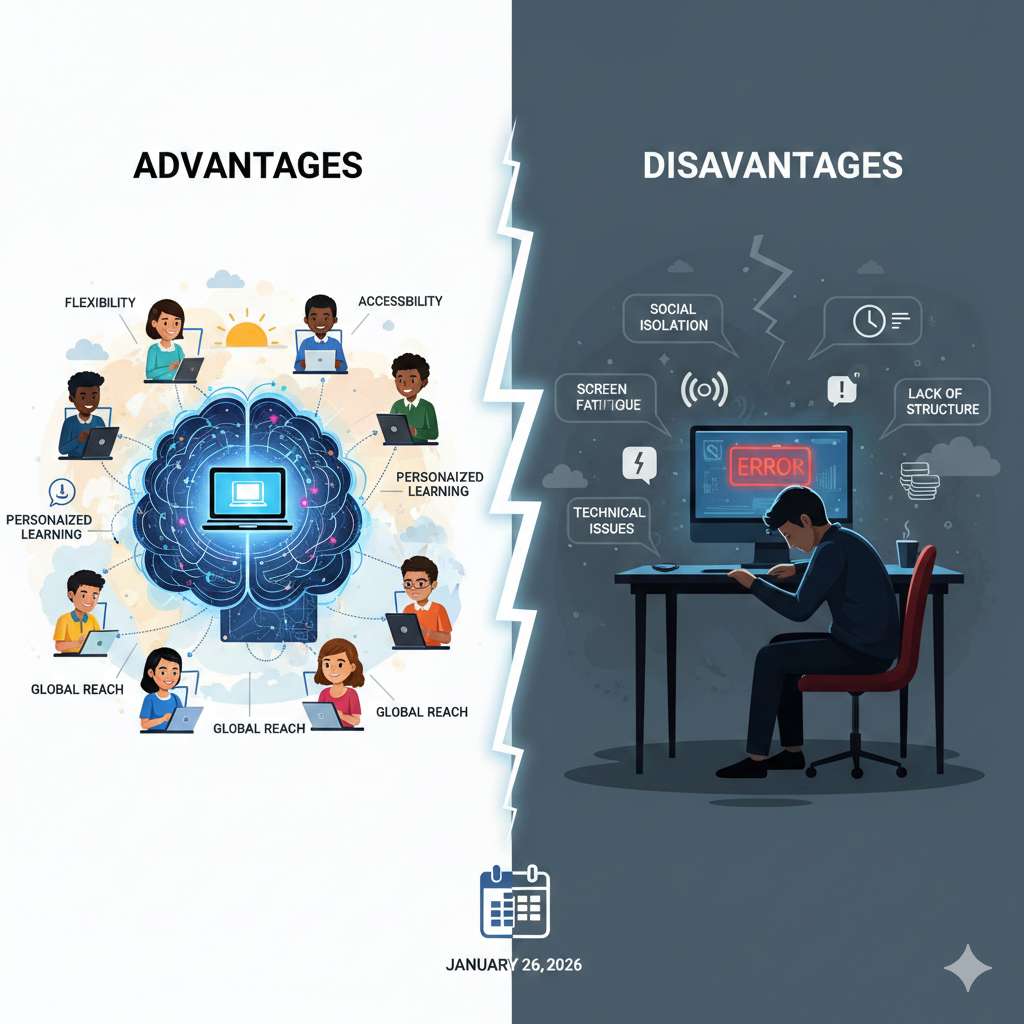
Digital Education: Advantages and Disadvantages Explained in Detail
In today’s fast-paced world, technology has transformed almost every aspect of our lives, and education is no exception. The rise of the internet, smartphones, tablets, and learning management systems has given birth to digital education, also known as e-learning or online education. From virtual classrooms and recorded lectures to AI-powered learning apps, digital education has changed how students learn and how teachers teach.
While digital education offers many benefits, it also comes with certain challenges. Understanding the advantages and disadvantages of digital education is essential for students, parents, teachers, and institutions to make informed decisions. This blog explores both sides in detail, helping you understand whether digital education is the right fit for modern learning needs.
What Is Digital Education?
Digital education refers to the use of digital technologies, tools, and platforms to deliver educational content and facilitate learning. It includes:
-
Online classes and virtual classrooms
-
E-learning platforms and MOOCs (Massive Open Online Courses)
-
Educational mobile apps
-
Recorded video lectures
-
Digital assessments and online exams
-
Interactive tools like simulations and virtual labs
Digital education can be fully online or blended with traditional classroom learning, often called blended learning or hybrid education.
Advantages of Digital Education
Digital education has gained popularity worldwide due to its flexibility, accessibility, and innovation. Below are the major advantages explained in detail.
1. Easy Accessibility and Convenience
One of the biggest advantages of digital education is accessibility. Students can learn from anywhere, whether they live in a city or a remote village. All they need is an internet connection and a digital device.
This convenience is especially beneficial for:
-
Working professionals
-
Students in rural or remote areas
-
Learners with physical disabilities
Digital education removes geographical barriers and makes learning available to a wider audience.
2. Flexible Learning Schedule
Unlike traditional classrooms with fixed schedules, digital education allows learners to study at their own pace. Recorded lectures and online materials can be accessed anytime, making it easier for students to balance studies with work or personal commitments.
This flexibility:
-
Reduces stress
-
Encourages self-paced learning
-
Helps learners revise topics multiple times
3. Cost-Effective Learning
Digital education is often more affordable than traditional education. Students save money on:
-
Transportation
-
Accommodation
-
Printed textbooks
-
Physical infrastructure costs
Many online courses and resources are either low-cost or free, making quality education accessible to students from different economic backgrounds.
4. Wide Range of Courses and Resources
Digital platforms offer a vast variety of courses across different subjects, skills, and industries. Students can choose from:
-
Academic subjects
-
Professional certifications
-
Skill-based courses
-
Language learning programs
This variety allows learners to explore multiple interests and gain industry-relevant skills.
5. Personalized Learning Experience
Digital education uses technology like AI and data analytics to personalize learning. Based on a student’s performance and progress, platforms can:
-
Recommend customized study materials
-
Adjust difficulty levels
-
Provide targeted feedback
Personalized learning helps students understand concepts better and improves learning outcomes.
6. Interactive and Engaging Content
Modern digital education is not limited to text-based content. It includes:
-
Videos and animations
-
Interactive quizzes
-
Gamified learning modules
-
Virtual labs and simulations
These tools make learning more engaging and help students grasp complex topics more easily.
7. Improved Digital Skills
Digital education naturally improves students’ technical and digital skills. Learners become familiar with:
-
Online research
-
Digital communication tools
-
Learning management systems
-
Software and applications
These skills are essential in today’s technology-driven job market.
8. Global Exposure and Collaboration
Online education connects students from different countries and cultures. Learners can:
-
Attend international courses
-
Participate in global discussions
-
Collaborate on group projects with peers worldwide
This global exposure enhances cultural understanding and broadens perspectives.
9. Environmentally Friendly
Digital education reduces the use of paper, books, and physical infrastructure. This helps:
-
Save trees
-
Reduce carbon emissions
-
Promote sustainable learning practices
It supports eco-friendly education models.
10. Continuous Learning Opportunities
Digital education encourages lifelong learning. Professionals can update their skills, learn new technologies, or switch careers without returning to full-time traditional education.
Disadvantages of Digital Education
Despite its many advantages, digital education also has limitations. Understanding these challenges is equally important.
1. Lack of Face-to-Face Interaction
One major disadvantage of digital education is limited personal interaction. Students may miss:
-
Classroom discussions
-
Peer bonding
-
Direct teacher guidance
This lack of human interaction can affect communication skills and emotional development, especially in younger learners.
2. Dependence on Technology and Internet
Digital education heavily depends on technology. Poor internet connectivity, power outages, or device issues can disrupt learning.
This digital dependency creates challenges for:
-
Students in rural areas
-
Economically weaker sections
-
Regions with unstable internet access
3. Reduced Motivation and Self-Discipline
Online learning requires a high level of self-discipline and motivation. Without a structured classroom environment, some students may:
-
Procrastinate
-
Lose focus
-
Skip lessons
Not all learners are self-motivated, which can impact academic performance.
4. Health Issues Due to Screen Time
Extended screen time is a common concern in digital education. Prolonged use of digital devices can lead to:
-
Eye strain
-
Headaches
-
Poor posture
-
Sleep problems
Without proper breaks and physical activity, digital learning may negatively affect health.
5. Limited Practical and Hands-On Learning
Certain subjects require hands-on experience, such as:
-
Science experiments
-
Medical training
-
Engineering labs
-
Fine arts and sports
Digital education may not fully replace practical learning, even with virtual simulations.
6. Assessment and Evaluation Challenges
Online exams and assessments raise concerns about:
-
Cheating and plagiarism
-
Fair evaluation
-
Technical errors during exams
Ensuring academic integrity in digital education remains a challenge for institutions.
7. Social Isolation
Students learning entirely online may feel isolated due to limited social interaction. This can impact:
-
Mental health
-
Teamwork skills
-
Emotional well-being
Traditional classrooms offer social experiences that are difficult to replicate online.
8. Teacher Training and Adaptation Issues
Not all teachers are trained to use digital tools effectively. Some may struggle with:
-
Technology adoption
-
Online engagement techniques
-
Digital content creation
This can affect the quality of online education.
9. Distractions at Home
Home environments may not always be suitable for learning. Distractions such as:
-
Noise
-
Social media
-
Household responsibilities
can reduce focus and productivity during online classes.
10. Digital Divide
The digital divide refers to unequal access to technology and internet services. Students without proper devices or connectivity are at a disadvantage, widening educational inequality.
Digital Education vs Traditional Education
Digital education and traditional education both have their strengths and weaknesses. While digital learning offers flexibility and accessibility, traditional education provides structured environments and face-to-face interaction. A balanced approach, such as blended learning, combines the best of both systems.
Future of Digital Education
The future of digital education looks promising with advancements in:
-
Virtual Reality (VR) and Augmented Reality (AR)
-
Adaptive learning systems
-
Blockchain-based certification
These technologies will further enhance learning experiences, making digital education more effective and inclusive.
Conclusion
Digital education has revolutionized the way knowledge is delivered and consumed. The advantages of digital education, such as flexibility, accessibility, cost-effectiveness, and personalized learning, make it an attractive option for modern learners. However, the disadvantages of digital education, including lack of interaction, health concerns, and digital inequality, cannot be ignored.