
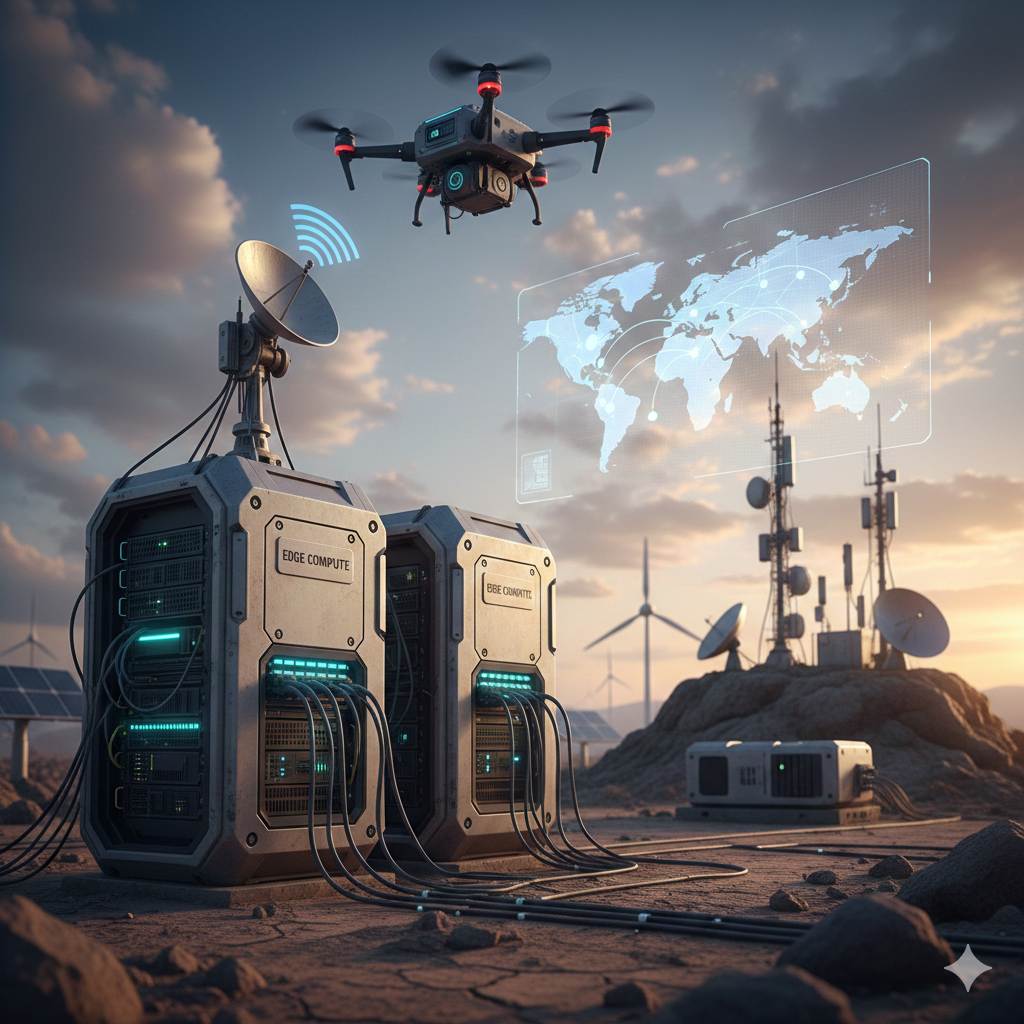
Edge Computing: The Future of Faster, Smarter, and Decentralized Data Processing
In today’s digital-first world, data is being generated at an unprecedented speed. From smart homes and wearable devices to autonomous vehicles and industrial machines, billions of connected devices continuously produce massive volumes of data. Traditional cloud computing, while powerful, often struggles to process this data efficiently due to latency, bandwidth limitations, and security concerns. This is where Edge Computing emerges as a game-changing technology.
Edge computing brings computation and data storage closer to the source of data generation, enabling faster processing, reduced latency, and improved real-time decision-making. As industries move toward automation and intelligence, edge computing is becoming a foundational pillar of modern IT infrastructure.
What Is Edge Computing?
Edge computing is a distributed computing paradigm that processes data at or near the “edge” of the network—closer to the devices generating the data—rather than sending all data to a centralized cloud or data center. The “edge” can include devices such as sensors, gateways, routers, local servers, or even the IoT devices themselves.
Instead of relying entirely on cloud servers located far away, edge computing allows data to be analyzed locally. Only relevant or summarized information is sent to the cloud, significantly improving efficiency and responsiveness.
Why Edge Computing Is Important
The rapid growth of Internet of Things (IoT) devices has made edge computing essential. Sending every piece of raw data to the cloud is no longer practical or cost-effective. Edge computing addresses several critical challenges:
1. Reduced Latency
Latency is the time taken for data to travel from source to processing center and back. For applications like autonomous vehicles, remote surgery, or industrial robotics, even milliseconds matter. Edge computing processes data locally, enabling near-instant responses.
2. Bandwidth Optimization
Transmitting large volumes of data to the cloud consumes significant network bandwidth. Edge computing filters and processes data locally, sending only essential insights to the cloud, thereby reducing bandwidth usage and costs.
3. Enhanced Reliability
Cloud connectivity is not always guaranteed. Edge computing allows systems to function independently, even during network disruptions, ensuring uninterrupted operations.
4. Improved Data Security and Privacy
By keeping sensitive data closer to its source, edge computing minimizes exposure during transmission. This is especially important for industries handling personal, medical, or financial data.
How Edge Computing Works
Edge computing operates through a layered architecture:
-
Edge Devices
These include IoT sensors, cameras, smart meters, and machines that generate raw data. -
Edge Nodes or Gateways
These act as intermediaries that aggregate, process, and analyze data locally using embedded computing power. -
Cloud or Central Data Center
Processed insights, summaries, or alerts are sent to the cloud for long-term storage, advanced analytics, or integration with enterprise systems.
This hybrid approach combines the speed of local processing with the scalability of cloud computing.
Edge Computing vs Cloud Computing
While edge computing and cloud computing are often compared, they are not competitors—they are complementary.
| Feature | Edge Computing | Cloud Computing |
|---|---|---|
| Data Processing | Near data source | Centralized data centers |
| Latency | Very low | Higher |
| Bandwidth Usage | Low | High |
| Scalability | Limited per node | Highly scalable |
| Best For | Real-time applications | Big data analytics, storage |
Most modern architectures use a hybrid model, where edge computing handles time-sensitive tasks and cloud computing manages heavy analytics and storage.
Key Technologies Powering Edge Computing
Several technologies work together to enable effective edge computing:
Internet of Things (IoT)
IoT devices are the primary data generators at the edge. Edge computing ensures that IoT systems operate efficiently and intelligently.
Artificial Intelligence (AI) and Machine Learning (ML)
AI models deployed at the edge allow devices to analyze data, detect patterns, and make decisions locally without cloud dependency.
5G Networks
5G provides ultra-low latency and high-speed connectivity, enhancing the performance of edge computing applications.
Containers and Microservices
Lightweight containerization technologies help deploy applications efficiently across distributed edge environments.
Use Cases of Edge Computing Across Industries
1. Healthcare
Edge computing enables real-time patient monitoring through wearable devices, smart medical equipment, and diagnostic tools. Data is processed instantly, allowing faster clinical decisions while maintaining patient privacy.
2. Manufacturing and Industry 4.0
Smart factories rely on edge computing for predictive maintenance, quality control, and robotic automation. Machines can analyze performance data locally to prevent failures and reduce downtime.
3. Smart Cities
Traffic management systems, surveillance cameras, and energy grids use edge computing to analyze data in real time, improving public safety and operational efficiency.
4. Autonomous Vehicles
Self-driving cars generate enormous data from sensors and cameras. Edge computing allows instant processing for navigation, obstacle detection, and safety decisions.
5. Retail
Retailers use edge computing for smart shelves, personalized offers, and inventory management by analyzing customer behavior directly in-store.
6. Agriculture
Precision farming uses edge computing to analyze soil data, weather conditions, and crop health, enabling efficient irrigation and yield optimization.
Benefits of Edge Computing
Edge computing offers numerous advantages that make it indispensable in modern digital ecosystems:
-
Faster data processing and real-time analytics
-
Lower operational costs due to reduced data transfer
-
Increased system resilience and availability
-
Better compliance with data privacy regulations
-
Improved user experience through instant responses
These benefits make edge computing ideal for mission-critical applications.
Challenges and Limitations of Edge Computing
Despite its advantages, edge computing also presents challenges:
1. Infrastructure Complexity
Managing thousands of distributed edge devices can be complex and resource-intensive.
2. Security Risks
While data transmission risks are reduced, edge devices themselves can be vulnerable to physical tampering or cyberattacks if not properly secured.
3. Limited Computing Power
Edge devices often have constrained processing and storage capabilities compared to cloud data centers.
4. Standardization Issues
The lack of universal standards can lead to compatibility and integration challenges across platforms.
Organizations must address these issues through robust security frameworks, device management tools, and hybrid architectures.
Edge Computing and the Future of Digital Transformation
Edge computing is not just a technological upgrade—it is a strategic enabler of digital transformation. As AI, IoT, and 5G continue to evolve, edge computing will play a central role in enabling intelligent, autonomous, and real-time systems.
Future advancements will likely include:
-
More powerful AI models running directly on edge devices
-
Greater integration with cloud-native platforms
-
Improved edge security and orchestration tools
-
Wider adoption across small and medium-sized businesses
Industries that adopt edge computing early will gain a significant competitive advantage in speed, efficiency, and innovation.
Conclusion
Edge computing is redefining how data is processed, analyzed, and utilized in the modern digital landscape. By bringing computation closer to data sources, it addresses the limitations of traditional cloud computing while unlocking new possibilities for real-time intelligence and automation.
Internet of Things (IoT): Transforming the Digital World Through Smart Connectivity