
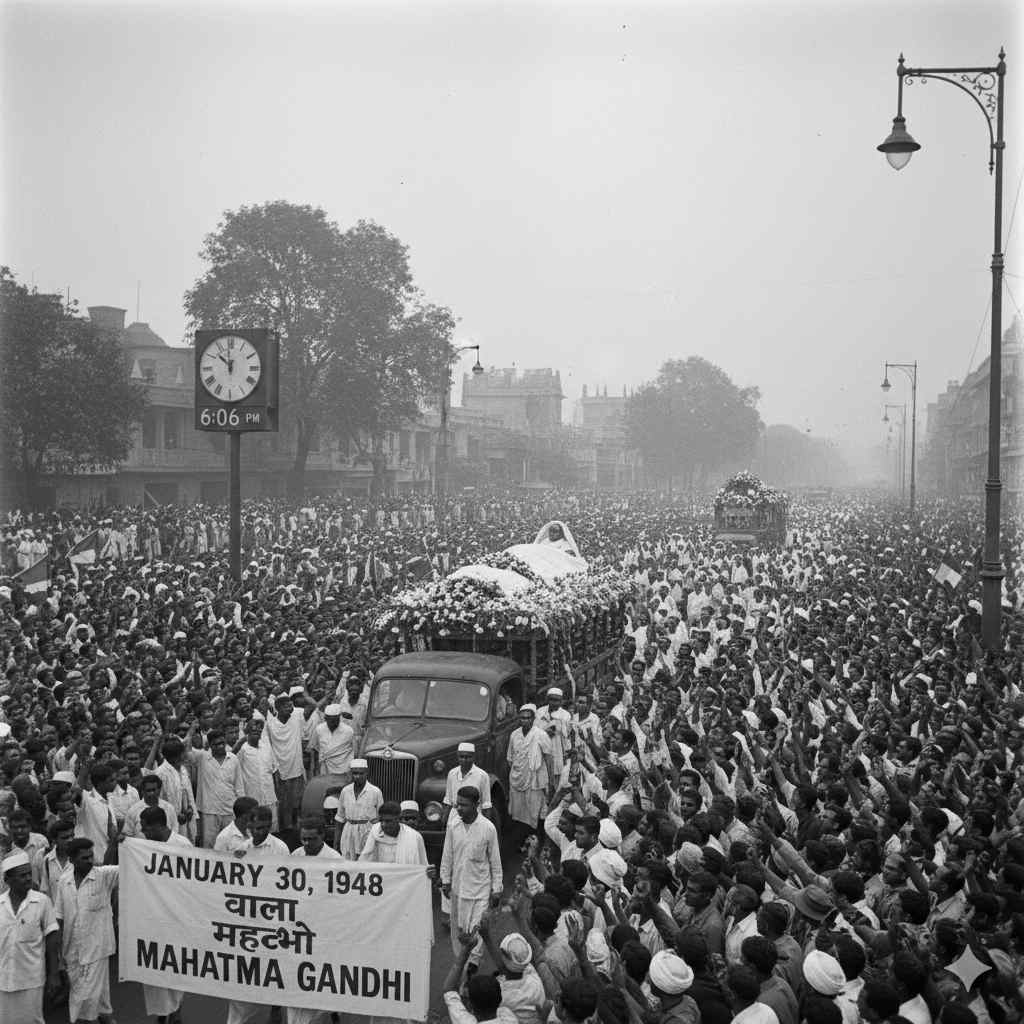
Mahatma Gandhi Date of Death: Remembering the Day India Lost the Father of the Nation
The phrase “Mahatma Gandhi date of death” is searched by millions who wish to understand not just a historical fact, but the profound loss that reshaped India and echoed across the world. Mahatma Gandhi, lovingly called Bapu and honored as the Father of the Nation, was more than a leader—he was a moral compass for humanity. His death marked the end of a life devoted entirely to truth, non-violence, and justice.
In this blog, we explore Mahatma Gandhi’s date of death, the circumstances surrounding it, its impact on India and the world, and why his legacy continues to remain relevant decades later.
Mahatma Gandhi Date of Death
Mahatma Gandhi died on 30 January 1948, at the age of 78.
He was assassinated in New Delhi during an evening prayer meeting at Birla House (now known as Gandhi Smriti). This tragic event occurred just months after India gained independence, making the loss even more painful for a nation still healing from the trauma of Partition.
The Day That Changed History: 30 January 1948
The **date of Mahatma Gandhi’s death—30 January 1948—**is remembered as one of the darkest days in Indian history. On that winter evening, Gandhi was walking to his daily prayer meeting when he was shot at point-blank range by Nathuram Godse.
Gandhi collapsed instantly, reportedly uttering the words “Hey Ram” as he fell. Within minutes, the man who had led India through decades of peaceful resistance was gone.
Today, 30 January is observed as Martyrs’ Day (Shaheed Diwas) in India to honor Gandhi and other freedom fighters who sacrificed their lives for the nation.
Why Was Mahatma Gandhi Assassinated?
To truly understand the significance of the Mahatma Gandhi date of death, it is important to look at the political and social tensions of the time.
After independence in August 1947, India was violently divided into India and Pakistan. Gandhi strongly advocated peace, communal harmony, and reconciliation between Hindus and Muslims. He even undertook hunger strikes to stop riots and urged India to release funds owed to Pakistan.
These actions angered extremist elements who believed Gandhi was being too sympathetic toward Muslims and Pakistan. Nathuram Godse, influenced by radical ideology, viewed Gandhi as an obstacle to his vision of India.
This ideological hatred ultimately led to Gandhi’s assassination.
India’s Reaction to Mahatma Gandhi’s Death
The news of Mahatma Gandhi’s death on 30 January 1948 sent shockwaves across the country.
-
Millions wept openly in the streets
-
Schools, offices, and markets shut down
-
People walked for miles to pay their last respects
Jawaharlal Nehru, India’s first Prime Minister, addressed the nation with the famous words:
“The light has gone out of our lives, and there is darkness everywhere.”
Gandhi’s funeral procession was attended by over a million people, making it one of the largest gatherings in history.
World’s Response to Mahatma Gandhi’s Death
The impact of the date of death of Mahatma Gandhi was not limited to India. Leaders and citizens across the world mourned his loss.
-
Albert Einstein called him “a beacon to the world”
-
Martin Luther King Jr. described Gandhi as a guiding force for civil rights
-
Nations lowered flags and observed moments of silence
Gandhi’s philosophy of non-violence (Ahimsa) had inspired global movements, and his death was felt as a loss to humanity itself.
Mahatma Gandhi’s Life Before His Death
To appreciate the importance of the Mahatma Gandhi date of death, one must reflect on the extraordinary life he lived.
Early Life
-
Born: 2 October 1869, Porbandar, Gujarat
-
Educated in law in London
Role in Freedom Struggle
-
Led the Non-Cooperation Movement
-
Started the Dandi Salt March
-
Championed Quit India Movement
-
Promoted Swadeshi and self-reliance
Gandhi believed that freedom could not be achieved through violence, a principle he followed until his last breath.
Gandhi Smriti: Place of Assassination
The site where Mahatma Gandhi was assassinated on 30 January 1948 is now preserved as Gandhi Smriti in New Delhi.
Visitors can:
-
See the exact spot where Gandhi fell
-
Walk along his final footsteps
-
Learn about his final days and thoughts
This memorial stands as a reminder of the ideals Gandhi lived and died for.
Observance of Martyrs’ Day in India
Every year on 30 January, India observes Martyrs’ Day to commemorate the death of Mahatma Gandhi.
Key observances include:
-
Prayer meetings across the country
-
Two minutes of silence at 11:00 AM
-
Floral tributes at Raj Ghat
Schools and institutions conduct programs to teach younger generations about Gandhi’s values and sacrifices.
Why Mahatma Gandhi’s Death Still Matters Today
Even decades after the date of death of Mahatma Gandhi, his ideas remain deeply relevant.
In a world struggling with:
-
Violence
-
Political polarization
-
Social inequality
Gandhi’s message of peace, tolerance, and ethical leadership offers timeless guidance. His death serves as a reminder of the cost of hatred and the power of compassion.
Lessons from Mahatma Gandhi’s Death
The tragic end of Gandhi’s life teaches us several important lessons:
-
Non-violence is a strength, not weakness
-
Hatred ultimately destroys societies
-
True leadership requires moral courage
-
Peace must be actively protected
The Mahatma Gandhi date of death is not just a historical fact—it is a call to reflect on how we treat one another.
Interesting Facts About Mahatma Gandhi’s Death
-
Gandhi was assassinated just 163 days after independence
-
He had survived several assassination attempts earlier
-
His ashes were immersed in multiple rivers, including the Ganga
-
The UN later declared 2 October (his birthday) as International Day of Non-Violence
Conclusion
The **Mahatma Gandhi date of death—30 January 1948—**marks the loss of a man whose life transformed nations and inspired generations. Though his physical presence ended on that day, his ideals continue to live on in movements for peace, justice, and freedom around the world.