Nelson Mandela Born: The Birth of a Legend Who Changed the World
When we talk about global icons who reshaped history through courage, compassion, and resilience, one name rises above all—Nelson Mandela. The story of Nelson Mandela born is not just about a date or a place; it marks the beginning of a journey that transformed South Africa and inspired millions across the world. From a small village birth to becoming the first Black President of South Africa, Mandela’s life stands as a testament to the power of perseverance and moral leadership.
Nelson Mandela Born: Early Life and Background
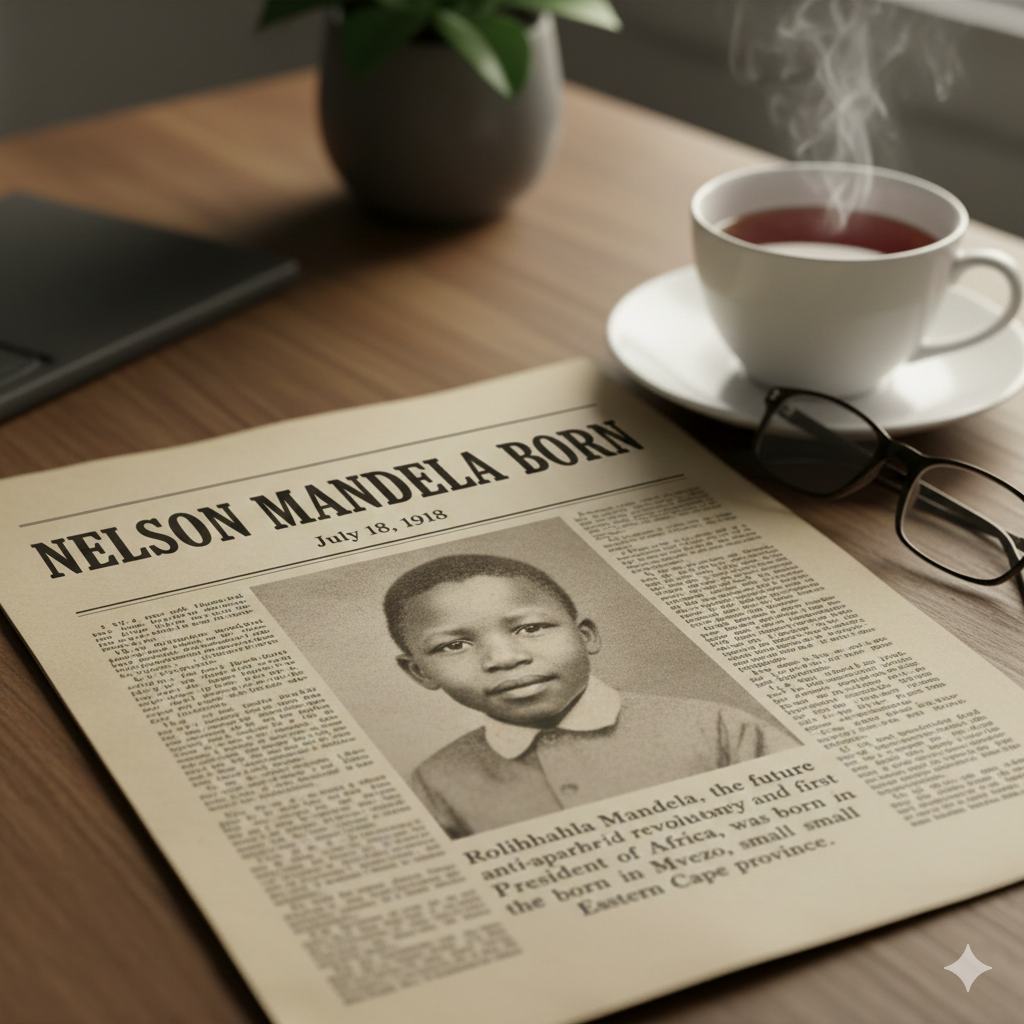
Nelson Rolihlahla Mandela was born on July 18, 1918, in the small village of Mvezo, located in the Eastern Cape of South Africa. He was born into the Thembu royal family, part of the Xhosa ethnic group. His birth name, Rolihlahla, literally translates to “pulling the branch of a tree,” but colloquially means “troublemaker.” Ironically, this name foreshadowed his future role in challenging injustice and dismantling apartheid.
Mandela’s father, Gadla Henry Mphakanyiswa, was a local chief and counselor to the Thembu king. His mother, Nosekeni Fanny, was the third of his father’s four wives. Though his family had royal lineage, they lived a modest life, deeply rooted in African traditions and values.
Childhood Influences After Nelson Mandela Was Born
After Nelson Mandela was born, his early years were shaped by storytelling, tribal customs, and communal living. His father passed away when Mandela was just nine years old, a turning point that deeply affected his life. Following his father’s death, Mandela was taken into the household of Chief Jongintaba Dalindyebo, the acting regent of the Thembu people.
Living in the regent’s home exposed Mandela to leadership, governance, and traditional African justice systems. These early experiences planted the seeds of his belief in dialogue, fairness, and collective responsibility—values that later defined his political philosophy.
Education: A New World Opens
Nelson Mandela was the first in his family to attend school. His teacher gave him the English name “Nelson”, a common practice during colonial rule. Education became a powerful tool in Mandela’s life, opening his eyes to the inequalities faced by Black South Africans.
He attended Fort Hare University, one of the few higher education institutions for Black Africans at the time. However, Mandela was expelled for participating in a student protest against unfair policies. This act of defiance marked the beginning of his lifelong resistance to injustice.
Later, Mandela moved to Johannesburg, where he completed his law studies and was exposed to the harsh realities of racial discrimination under apartheid.
Political Awakening and Activism
Understanding the context of Nelson Mandela born means recognizing the era into which he was born—a time of deep racial segregation and colonial oppression. In Johannesburg, Mandela joined the African National Congress (ANC) in 1944 and helped establish the ANC Youth League.
Mandela believed that the youth could bring energy and radical change to the freedom movement. Initially, his activism focused on nonviolent resistance, inspired by leaders like Mahatma Gandhi. He organized protests, strikes, and campaigns against discriminatory laws imposed by the apartheid government.
From Peaceful Protest to Armed Resistance
As apartheid laws grew harsher, peaceful protests were met with brutal force. The Sharpeville Massacre of 1960, where police killed 69 unarmed protesters, changed Mandela’s outlook. He concluded that nonviolence alone was no longer effective.
Mandela co-founded Umkhonto we Sizwe, the armed wing of the ANC, focusing on sabotage rather than loss of life. This decision was controversial but rooted in his belief that freedom was worth fighting for.
Arrest, Trial, and Life Imprisonment
In 1962, Mandela was arrested and later sentenced to life imprisonment during the infamous Rivonia Trial. His courtroom speech became legendary, ending with the powerful words:
“It is an ideal for which I am prepared to die.”
Mandela spent 27 years in prison, most of them on Robben Island, enduring harsh conditions, forced labor, and isolation. Despite this, he emerged not with bitterness, but with a commitment to reconciliation.
Nelson Mandela Born Into Struggle, Forged by Prison
The significance of Nelson Mandela born becomes even clearer when we reflect on how prison shaped his leadership. Behind bars, Mandela became a global symbol of resistance against apartheid. He studied, taught fellow prisoners, and negotiated secretly with the apartheid regime.
Rather than seeking revenge, Mandela chose forgiveness and unity—a rare and powerful stance that shocked the world.
Release and the Road to Freedom
In 1990, after intense international pressure and internal resistance, Nelson Mandela was released from prison. His release marked the beginning of the end of apartheid.
Mandela led negotiations to dismantle apartheid laws and establish a democratic South Africa. In 1994, he became South Africa’s first Black President, following the country’s first multiracial elections.
Presidency and Global Leadership
As president, Mandela focused on nation-building, reconciliation, and healing a divided country. He formed the Truth and Reconciliation Commission, allowing victims and perpetrators of apartheid-era crimes to share their stories.
Mandela’s leadership proved that justice and peace could coexist. His presidency set a global example of ethical governance and humility.
Nelson Mandela Born to Inspire the World
The legacy of Nelson Mandela born extends far beyond South Africa. Mandela became a global icon for human rights, equality, and peace. He received numerous international honors, including the Nobel Peace Prize in 1993.
Even after stepping down as president, Mandela continued to advocate for education, HIV/AIDS awareness, and social justice until his passing in 2013.
Why Nelson Mandela’s Birth Still Matters Today
Understanding when and where Nelson Mandela was born helps us appreciate how extraordinary his journey truly was. Born into a world of inequality, he rose not through privilege, but through integrity, sacrifice, and vision.
His life teaches us:
-
Courage can overcome oppression
-
Forgiveness is stronger than hatred
-
Leadership is about service, not power
Conclusion
The phrase Nelson Mandela born represents more than a historical fact—it marks the beginning of a legacy that reshaped humanity’s understanding of justice and freedom. From a rural village in South Africa to the global stage, Mandela’s life reminds us that one person, guided by principles and perseverance, can indeed change the world.