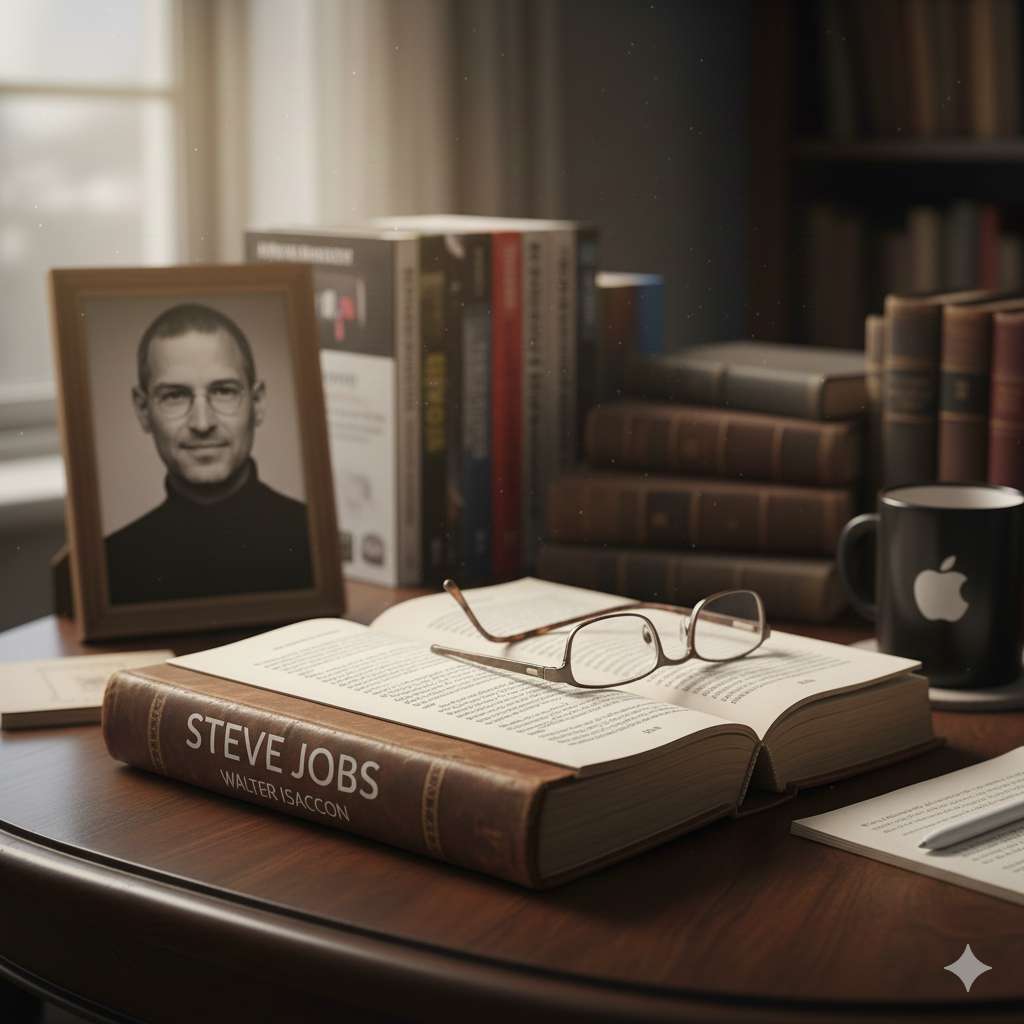
Steve Jobs Biography: The Visionary Who Changed the World of Technology
Steve Jobs is one of the most influential figures in modern history. Best known as the co-founder of Apple Inc., Jobs transformed the way people interact with technology. His passion for design, innovation, and simplicity revolutionized personal computing, mobile phones, music, and digital entertainment. This Steve Jobs biography explores his early life, career milestones, challenges, achievements, and lasting legacy.
Early Life of Steve Jobs
Steve Jobs was born on February 24, 1955, in San Francisco, California. He was adopted shortly after birth by Paul and Clara Jobs, who raised him in Mountain View, California, an area that later became known as Silicon Valley. From an early age, Jobs showed curiosity about electronics and mechanics, largely influenced by his father, who taught him how to work with tools and electronics in their garage.
Jobs attended Homestead High School, where he met Steve Wozniak, a brilliant engineer who would later become his business partner. Although Jobs was intelligent, he struggled with formal education and often found traditional schooling uninteresting.
College Years and Spiritual Journey
After high school, Steve Jobs enrolled at Reed College in Oregon. However, he dropped out after just six months, feeling that the rigid academic structure did not align with his interests. Despite leaving college officially, Jobs continued attending classes that fascinated him, including a calligraphy course that later influenced Apple’s elegant typography.
During this period, Jobs also explored spirituality. He traveled to India in search of enlightenment and became deeply interested in Zen Buddhism, which shaped his minimalist philosophy and approach to life and product design.
The Birth of Apple Inc.
In 1976, Steve Jobs, Steve Wozniak, and Ronald Wayne founded Apple Computer in the Jobs family garage. Their first product, the Apple I, was a simple computer sold as a circuit board. While it was modest, it laid the foundation for Apple’s future success.
The real breakthrough came in 1977 with the Apple II, one of the first mass-produced personal computers. It was user-friendly, visually appealing, and powerful for its time. The Apple II became a commercial success and established Apple as a major player in the tech industry.
Rise to Fame with the Macintosh
In 1984, Apple launched the Macintosh, the first widely available computer with a graphical user interface (GUI) and a mouse. The famous “1984” Super Bowl advertisement introduced the Macintosh as a revolutionary product.
While the Macintosh was innovative, it faced strong competition from IBM PCs and internal conflicts within Apple. Jobs’ intense personality and demanding leadership style led to tensions with Apple’s board of directors.
Steve Jobs Leaves Apple
In 1985, following a power struggle with CEO John Sculley, Steve Jobs was forced to leave the company he co-founded. This period was emotionally challenging but proved to be a turning point in his life.
Shortly after leaving Apple, Jobs founded a new company called NeXT Inc. NeXT focused on high-end computers for education and business. Although NeXT computers were not commercially successful, their advanced software later played a crucial role in Apple’s revival.
Pixar and Success in Animation
In 1986, Steve Jobs purchased a small animation studio from Lucasfilm, which he renamed Pixar Animation Studios. Under Jobs’ leadership, Pixar produced groundbreaking animated films.
In 1995, Pixar released Toy Story, the world’s first fully computer-animated feature film. The movie was a massive success and revolutionized the animation industry. Pixar went on to create several blockbuster films, including Finding Nemo, The Incredibles, and Up.
Pixar’s success made Jobs a billionaire and established him as a visionary beyond the technology sector.
Return to Apple and a Historic Comeback
In 1997, Apple acquired NeXT, bringing Steve Jobs back to the company as an advisor. Soon after, he became interim CEO, later officially taking on the role.
At the time, Apple was struggling financially. Jobs made bold decisions, cutting unprofitable products and focusing on innovation and design. His leadership sparked one of the greatest corporate comebacks in history.
Revolutionary Products That Changed the World
Steve Jobs led the development of several iconic products that reshaped entire industries:
iMac (1998)
The colorful, all-in-one iMac redefined personal computers with its sleek design and ease of use.
iPod (2001)
The iPod transformed how people listened to music, allowing users to carry thousands of songs in their pockets.
iTunes Store
Paired with the iPod, the iTunes Store revolutionized digital music distribution and changed the music industry forever.
iPhone (2007)
The iPhone was a game-changer. Combining a phone, music player, and internet device, it redefined smartphones and set new industry standards.
iPad (2010)
The iPad introduced a new category of devices, bridging the gap between smartphones and laptops.
Leadership Style and Personality
Steve Jobs was known for his perfectionism, intensity, and high expectations. He demanded excellence from his teams and often pushed people beyond their limits. While some criticized his management style as harsh, others credited him for inspiring innovation and creativity.
Jobs believed in simplicity, both in design and communication. His famous product launch presentations became legendary for their clarity and impact.
Health Struggles and Final Years
In 2003, Steve Jobs was diagnosed with a rare form of pancreatic cancer. Although he initially delayed conventional treatment, he later underwent surgery and medical care.
Despite ongoing health issues, Jobs continued to lead Apple and oversee major product launches. In 2011, due to declining health, he resigned as Apple’s CEO, handing over leadership to Tim Cook.
Steve Jobs passed away on October 5, 2011, at the age of 56.
Nelson Mandela Biography: Life, Struggle, and Legacy of a Global Icon
Steve Jobs’ Legacy
The legacy of Steve Jobs extends far beyond Apple. He changed how technology is designed, marketed, and experienced. His emphasis on user experience, aesthetics, and innovation influenced countless companies and entrepreneurs worldwide.
Jobs also inspired millions with his famous Stanford Commencement Speech, where he shared lessons about passion, failure, and following one’s heart.
Lessons from Steve Jobs’ Life
The Steve Jobs biography offers valuable lessons:
-
Innovation comes from passion
-
Failure can lead to success
-
Simplicity is powerful
-
Follow your intuition
-
Think differently
His life proves that creativity and determination can change the world.
Conclusion
Steve Jobs was more than a businessman; he was a visionary who redefined technology and culture. From a college dropout working in a garage to the co-founder of one of the world’s most valuable companies, his journey is truly inspirational. This Steve Jobs biography highlights a life driven by curiosity, creativity, and an unwavering belief in innovation.