
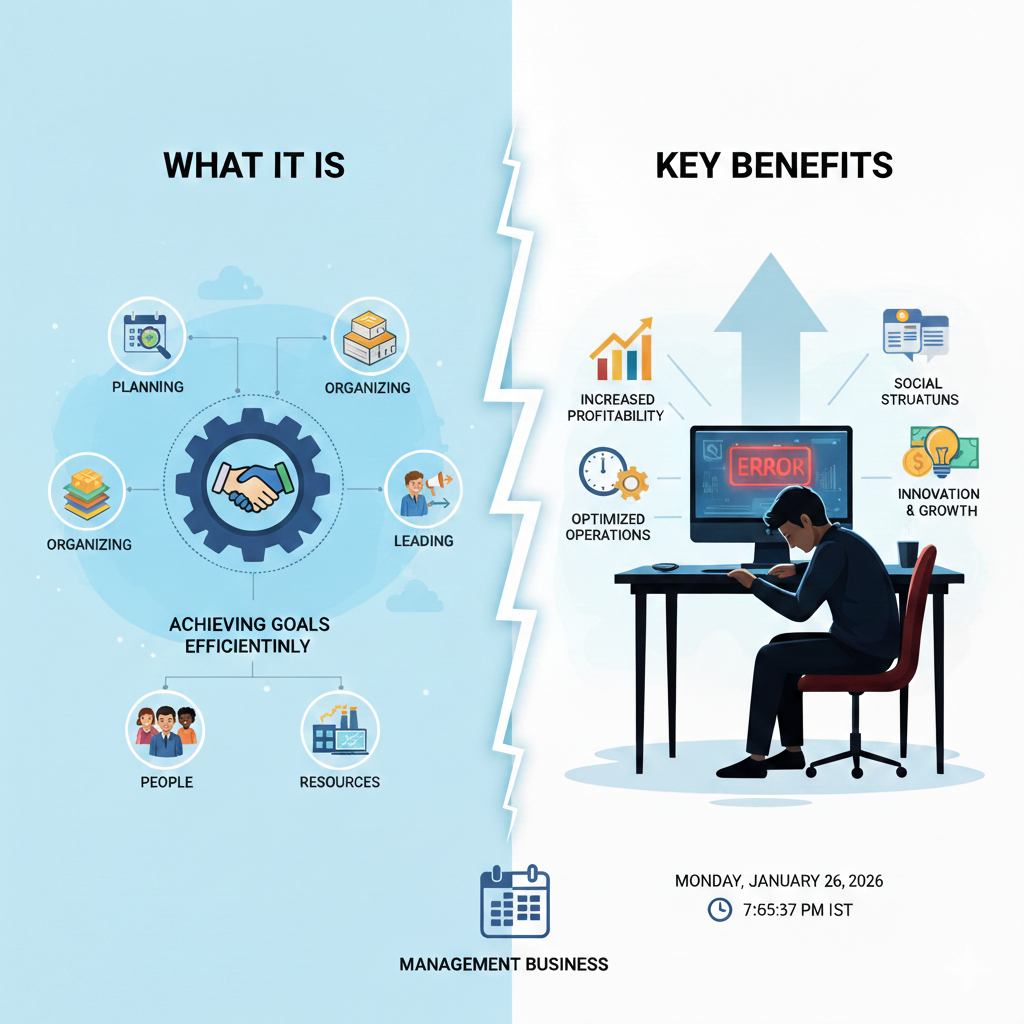
What Is Management Business? Meaning, Functions, Types, and Importance
In today’s fast-changing corporate and entrepreneurial world, the term management business is used everywhere—from startups and small enterprises to multinational corporations. But many people still ask a basic yet important question: what is management business? Understanding this concept is essential for anyone who wants to run an organization successfully, grow a business, or pursue a career in management.
This blog explains the meaning of management business, its core functions, types, importance, skills required, and real-world applications in a simple and practical way.
What Is Management Business?
Management business refers to the process of planning, organizing, directing, and controlling business activities to achieve organizational goals efficiently and effectively. It involves coordinating people, resources, and processes to ensure that a business operates smoothly and delivers desired results.
In simple words, management business is about getting work done through people in an organized manner. It ensures that business objectives such as profit, growth, quality, and customer satisfaction are achieved within a given time and budget.
Definition of Management Business
Here are some commonly accepted definitions:
-
Management is the art of getting things done through others.
-
Management business is the systematic process of using resources—human, financial, and physical—to achieve business goals.
-
Management involves decision-making, leadership, and coordination to run a business successfully.
These definitions highlight that management business is both a science (systematic methods) and an art (skills and judgment).
Why Is Management Important in Business?
Management is the backbone of any business. Without proper management, even the best business idea can fail.
Key Reasons Why Management Business Is Important:
-
Achieves Organizational Goals
Management aligns individual efforts with business objectives. -
Optimal Use of Resources
It ensures effective use of money, manpower, machinery, and materials. -
Improves Efficiency and Productivity
Proper planning and coordination reduce waste and duplication. -
Ensures Business Growth and Stability
Strategic management helps businesses expand and adapt to change. -
Encourages Innovation
Managers promote creativity and new ideas to stay competitive.
Core Functions of Management Business
The management business process is usually divided into five main functions:
1. Planning
Planning is the first and most important function of management. It involves deciding in advance what needs to be done and how it will be done.
Examples of planning include:
-
Setting business goals
-
Creating strategies
-
Forecasting future trends
-
Budgeting
Good planning reduces uncertainty and helps businesses prepare for future challenges.
2. Organizing
Organizing involves arranging resources and tasks in a structured manner. It defines roles, responsibilities, and authority within the organization.
Key elements of organizing:
-
Division of work
-
Departmentalization
-
Assignment of duties
-
Establishing reporting relationships
Proper organization ensures smooth workflow and accountability.
3. Staffing
Staffing refers to recruiting, selecting, training, and developing employees to fill organizational roles.
Staffing includes:
-
Hiring skilled employees
-
Training and development
-
Performance evaluation
-
Employee retention
The success of management business depends heavily on having the right people in the right positions.
4. Directing
Directing means guiding and motivating employees to perform their tasks efficiently.
It involves:
-
Leadership
-
Motivation
-
Communication
-
Supervision
Effective direction helps employees understand their roles and work toward common goals with enthusiasm.
5. Controlling
Controlling ensures that actual performance matches planned performance.
Controlling includes:
-
Setting performance standards
-
Measuring actual results
-
Comparing performance with standards
-
Taking corrective action
This function helps maintain quality, control costs, and achieve consistency.
Types of Management in Business
Management business can be classified into different types based on function and level:
1. Strategic Management
Strategic management focuses on long-term goals and overall business direction. It involves top-level management decisions such as expansion, mergers, and market positioning.
2. Operational Management
Operational management deals with daily business activities like production, quality control, and service delivery.
3. Financial Management
Financial management handles budgeting, accounting, investment decisions, and cash flow management.
4. Human Resource Management
HR management focuses on employee recruitment, training, motivation, and performance management.
5. Marketing Management
Marketing management deals with promoting products or services, pricing strategies, market research, and customer satisfaction.
Levels of Management Business
Management business operates at three main levels:
1. Top-Level Management
Includes CEOs, directors, and owners. They focus on policy formulation, strategic planning, and overall business performance.
2. Middle-Level Management
Includes department heads and managers who implement strategies and coordinate between top and lower management.
3. Lower-Level Management
Includes supervisors and team leaders who oversee day-to-day operations and guide workers.
Skills Required for Effective Management Business
To succeed in management business, certain skills are essential:
1. Technical Skills
Knowledge of specific tasks, tools, or industry processes.
2. Human Skills
Ability to communicate, motivate, and work with people.
3. Conceptual Skills
Ability to understand the big picture and think strategically.
4. Decision-Making Skills
Choosing the best course of action from available alternatives.
5. Time Management Skills
Efficient use of time to maximize productivity.
Role of Management Business in Modern Organizations
In today’s competitive environment, management business plays a critical role in:
-
Adapting to technological changes
-
Managing remote and hybrid teams
-
Ensuring customer satisfaction
-
Maintaining ethical and sustainable practices
-
Handling risks and uncertainty
Modern managers must be flexible, innovative, and data-driven.
Management Business in Small vs Large Organizations
Small Businesses:
-
Management roles are often combined
-
Owners act as managers
-
Faster decision-making
Large Businesses:
-
Clear hierarchy and specialization
-
Formal management systems
-
Structured planning and control
Regardless of size, effective management business is crucial for success.
Advantages of Good Management Business
-
Higher productivity
-
Better employee satisfaction
-
Improved customer service
-
Reduced operational risks
-
Long-term business sustainability
A well-managed business can survive economic downturns and competitive pressures.
Challenges in Management Business
Despite its importance, management business faces several challenges:
-
Rapid technological changes
-
Employee retention issues
-
Global competition
-
Economic uncertainty
-
Work-life balance concerns
Skilled managers overcome these challenges through planning, leadership, and innovation.
Future of Management Business
The future of management business is evolving with trends such as:
-
Artificial Intelligence and automation
-
Data-driven decision making
-
Remote work culture
-
Sustainable and ethical management
-
Agile and flexible organizational structures
Managers who adapt to these changes will lead successful businesses.
Conclusion
So, what is management business?
It is the foundation of every successful organization. Management business involves planning, organizing, staffing, directing, and controlling resources to achieve business goals efficiently. Whether you are an entrepreneur, student, or professional, understanding management business helps you make better decisions, improve productivity, and drive growth.