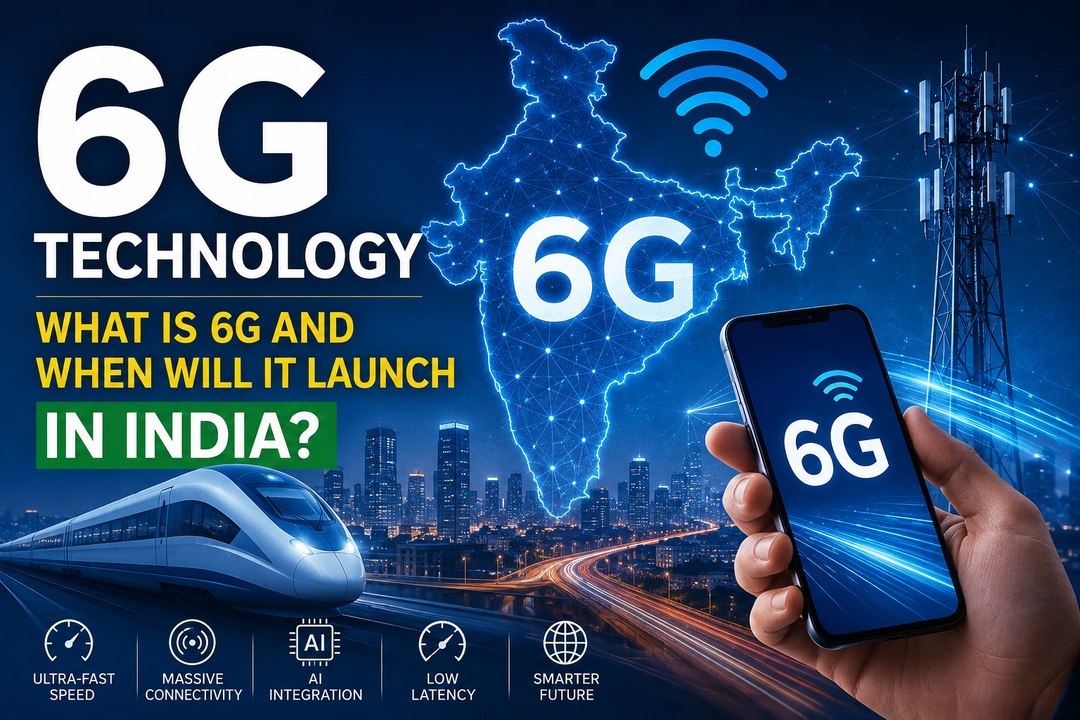
6G Technology: What Is 6G and When Will It Launch in India?
The world of mobile connectivity is already moving beyond 5G, and 6G technology is expected to become the next major evolution in wireless communication. While 5G is still expanding across India, researchers, governments, telecom companies and technology organizations are already working on the technologies that could power the next generation of mobile networks.
India has also started preparing for the 6G era. The Government of India launched the Bharat 6G Vision in March 2023, with the ambition of making India a global leader in designing, developing and deploying 6G technology by 2030.
But what exactly is 6G? How will it be different from 5G? And most importantly, when will 6G launch in India?
Let’s take a closer look.
What Is 6G Technology?
6G stands for Sixth-Generation Wireless Technology. It is the planned successor to 5G and is being developed to provide much faster, more intelligent, reliable and connected communication networks.
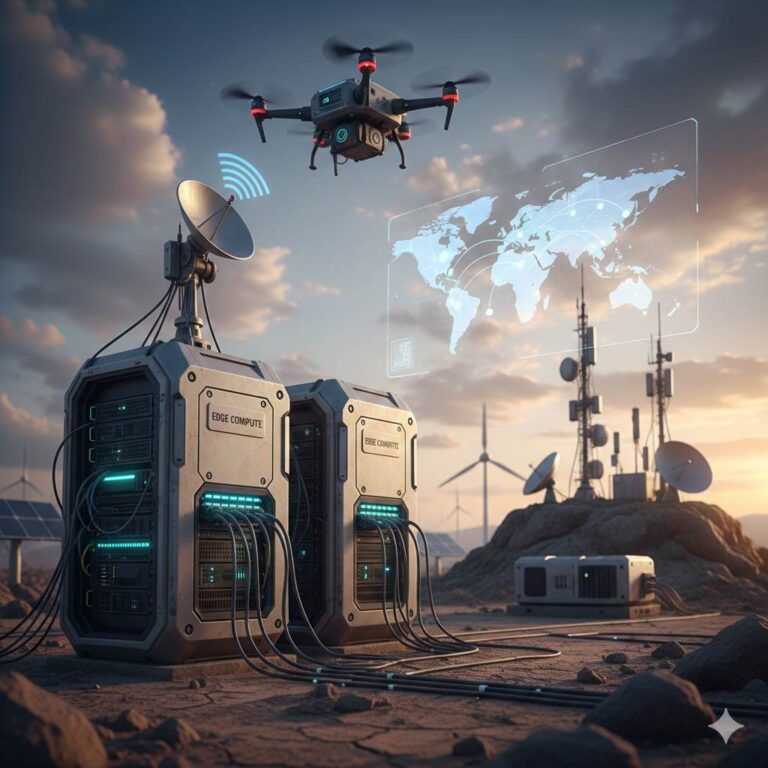
Unlike previous generations that mainly focused on faster internet and better mobile connectivity, 6G is expected to combine advanced wireless communication with technologies such as Artificial Intelligence (AI), machine learning, edge computing, robotics, immersive communication and advanced sensing.
The goal is not simply to make smartphones faster. 6G could connect people, machines, vehicles, robots, sensors and other intelligent systems in real time.
6G vs 5G: What’s the Difference?
5G introduced major improvements in speed, latency and the number of devices that can connect to a network. 6G is expected to take these capabilities much further.
Some expected improvements include:
- Much higher data speeds
- Extremely low latency
- More reliable communication
- AI-native network management
- Massive device connectivity
- Advanced sensing capabilities
- Better integration of communication and computing
- Improved support for immersive technologies
However, exact commercial specifications and performance targets will depend on the final international standards and network implementations.
How Fast Will 6G Be?
One of the biggest questions surrounding 6G is speed.
6G is being designed with extremely high data rates in mind, potentially reaching terabit-per-second-class peak speeds in some future scenarios and technologies. However, these figures should not be interpreted as the normal speed that consumers will necessarily receive on their smartphones.
Real-world speeds will depend on spectrum availability, network infrastructure, device capabilities, coverage and other technical factors.
When Will 6G Launch in India?
India has set an ambitious target for 6G development.
The Government of India launched the Bharat 6G Vision in 2023, aiming to position India as a global leader in 6G design, development and deployment by 2030.
As of 2026, India is still in the research, development, testing and standardization phase rather than a nationwide commercial 6G rollout.
The Department of Telecommunications has been working on spectrum planning for future 6G networks, while India is also supporting 6G research through testbeds and research projects.
Therefore, 2030 is best understood as India’s major 6G target year, not a guaranteed nationwide commercial launch date.
India’s Bharat 6G Mission
India’s 6G strategy is being developed under the broader Bharat 6G Mission.
The government has supported research projects, testbeds and collaborations involving universities, research institutions and industry.
According to the Department of Telecommunications, more than 100 research proposals related to 6G network ecosystems had been approved, while dedicated testbeds include work on 6G THz technology and advanced optical communication.
India is also working through the Bharat 6G Alliance, which brings together industry, academia and government organizations to support research, standardization and development of the 6G ecosystem.
What Could 6G Be Used For?
6G could have applications far beyond faster mobile internet.
1. Smart Cities
6G could connect enormous numbers of sensors and devices across smart cities. Traffic systems, public transportation, energy networks and infrastructure could communicate more efficiently.
2. AI and Intelligent Devices
AI could become deeply integrated into communication networks. Networks may automatically analyze traffic, optimize resources and respond to changing conditions.
3. Autonomous Vehicles
Future autonomous cars, drones and other vehicles could benefit from extremely low-latency communication and real-time data exchange.
4. Healthcare
6G could support advanced telemedicine, remote monitoring, connected medical devices and potentially more sophisticated remote procedures where infrastructure and safety requirements allow.
5. Robotics
Factories, warehouses and other industrial environments could use highly connected robots that communicate with cloud and edge systems in real time.
6. Augmented and Virtual Reality
6G could improve immersive experiences by supporting high-bandwidth, low-latency communication for AR, VR and other extended-reality applications.
6G and Artificial Intelligence
One of the most important differences between future 6G networks and today’s networks could be the role of Artificial Intelligence.
AI could help networks automatically detect congestion, optimize resources, identify problems and improve network performance.
Instead of networks simply carrying data, future networks could become more intelligent and adaptive.
This could be especially important as billions of devices become connected.
Will 6G Require a New Smartphone?
Most likely, yes.
Just as 4G and 5G require compatible network hardware and devices, commercial 6G networks will require 6G-compatible smartphones and other equipment.
Existing 5G smartphones are not expected to simply become 6G devices through a software update. New modem technology, radio components and network support will be required.
However, consumers do not need to worry about upgrading immediately. 6G commercial availability is still years away, and 5G networks will continue to evolve.
What About 5G in India?
India is still expanding its 5G ecosystem while preparing for 6G.
In February 2026, the Ministry of Communications said 5G services had reached 99.9% of India’s districts, demonstrating how quickly the country’s 5G infrastructure has expanded.
This existing 5G infrastructure and experience can help India develop the technologies, skills and ecosystem needed for the transition toward 6G.
Challenges for 6G in India
Although 6G has enormous potential, several challenges need to be addressed.
Spectrum Availability
6G will require access to suitable spectrum bands. India is already working on a long-term spectrum roadmap for future networks.
Infrastructure
New network infrastructure, fiber connectivity, data centers and advanced radio equipment will be required.
Cost
Building a nationwide next-generation network can require significant investment from governments and telecom operators.
Cybersecurity
As billions of devices become connected, protecting networks, devices and personal data will become increasingly important.
Device Ecosystem
Affordable 6G-compatible smartphones, modems and connected devices will be necessary for widespread adoption.
Is 6G Available in India Right Now?
No.
As of 2026, India does not have a nationwide commercial 6G mobile service. The country is currently working on research, development, testing, spectrum planning and international standardization.
The government’s stated ambition is to establish India as a global 6G leader by 2030.
Final Thoughts :
6G technology could transform the way people, machines and intelligent systems communicate. It is expected to go beyond faster internet by combining advanced connectivity with AI, sensing, computing, robotics and immersive technologies.
For India, the Bharat 6G Vision 2030 represents an ambitious attempt to participate in—and potentially lead—the development of the next generation of wireless technology.
However, consumers should remember that 2030 is a strategic target for India’s 6G leadership and deployment, not a confirmed nationwide commercial launch date.
For now, 5G remains the focus of India’s consumer telecom market, while 6G research and development continues behind the scenes.