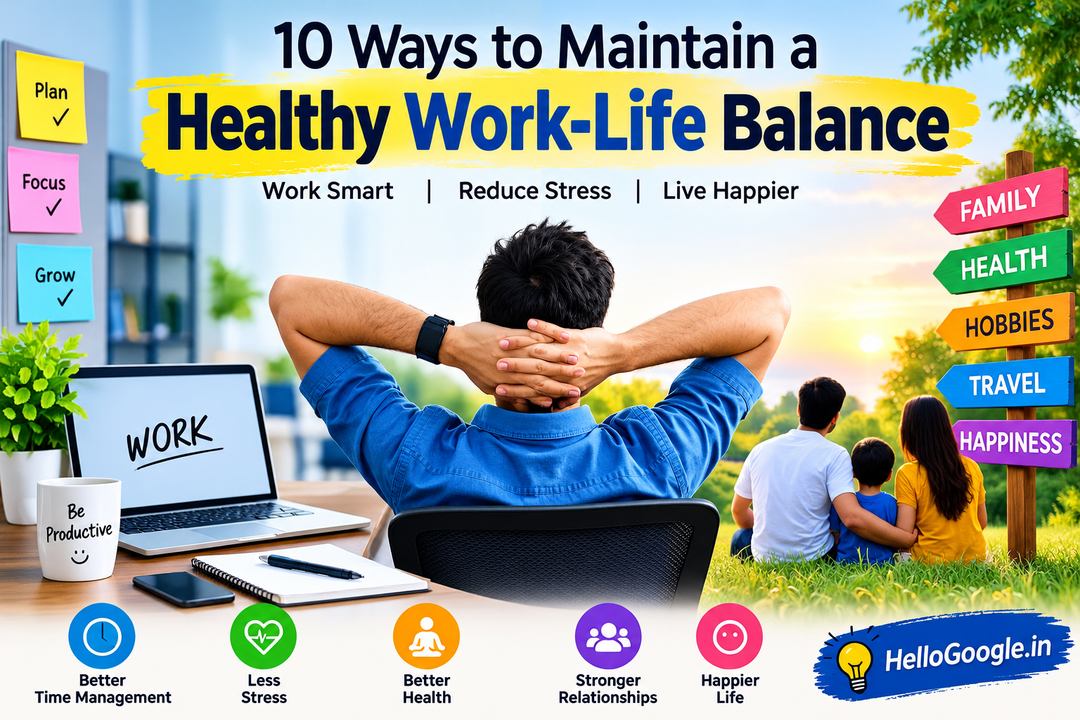
10 Ways to Maintain a Healthy Work-Life Balance
In today’s fast-paced world, maintaining a healthy work-life balance can be challenging. With long working hours, constant notifications, deadlines, meetings, household responsibilities, and personal commitments, it can sometimes feel difficult to find enough time for yourself.
A healthy work-life balance does not mean dividing every day equally between work and personal life. Instead, it means creating a routine where you can manage your professional responsibilities while still having enough time for family, friends, hobbies, rest, and personal well-being.
When work starts taking over your personal time, it can affect your energy, relationships, productivity, and overall quality of life. On the other hand, having a better balance can help you stay focused at work while giving you more time to enjoy life outside your job.
In this article, we will discuss 10 practical ways to maintain a healthy work-life balance. These simple strategies can help you manage your time, set boundaries, reduce unnecessary stress, and create a more balanced lifestyle.
What Is a Healthy Work-Life Balance?
A healthy work-life balance means being able to give proper attention to both your professional and personal responsibilities without allowing one area to completely dominate the other.
It includes having enough time for:
- Work and career responsibilities
- Family and relationships
- Sleep and rest
- Exercise and physical activity
- Hobbies and entertainment
- Personal development
- Social activities
- Relaxation and self-care
Work-life balance looks different for everyone. A business owner, office employee, freelancer, student, or remote worker may have different schedules and responsibilities.
The goal is not to create a perfect schedule. The goal is to develop a lifestyle that is productive, sustainable, and enjoyable.
Why Is Work-Life Balance Important?
Maintaining a healthy work-life balance can have several benefits.
1. It Can Improve Productivity
Working continuously for long hours does not always mean getting more work done. When you have enough time to rest, your mind can recover and you may be able to concentrate better.
Taking regular breaks and having time away from work can help you return to tasks with a clearer mind.
2. It Helps You Manage Stress
A busy work schedule can become overwhelming when there is little time for relaxation. Creating boundaries between work and personal life can give you opportunities to unwind.
3. It Supports Relationships
Family and friendships require time and attention. Spending quality time with people you care about can strengthen relationships and provide emotional support.
4. It Gives You Time for Yourself
Personal time is important. Reading, exercising, traveling, listening to music, cooking, or simply relaxing can help you enjoy life beyond your professional responsibilities.
5. It Creates a More Sustainable Lifestyle
A schedule that constantly leaves you exhausted is difficult to maintain for a long period. A balanced routine can make your lifestyle more sustainable.
10 Ways to Maintain a Healthy Work-Life Balance
1. Set Clear Working Hours
One of the simplest ways to improve your work-life balance is to establish clear working hours.
If you work from an office, your schedule may already be defined. However, remote workers, freelancers, entrepreneurs, and people with flexible schedules may find it harder to separate work from personal time.
Try to decide when your workday starts and when it ends.
For example, you might choose:
- 9:00 AM to 6:00 PM for work
- 6:00 PM onward for personal time
The exact hours are not important. What matters is creating a clear boundary.
Once your working hours are over, avoid checking work emails or messages unnecessarily unless there is an important reason to do so.
Practical Tip
Create a simple “end of workday” routine. Close your laptop, organize your desk, review tomorrow’s priorities, and then move away from your workspace.
This small habit can help signal to your brain that the working day is finished.
2. Prioritize Your Most Important Tasks
Trying to complete everything at once can make your workday stressful.
Instead of creating a huge to-do list, identify the most important tasks for the day.
You can divide your tasks into three categories:
- High priority: Tasks that must be completed today
- Medium priority: Tasks that are important but can wait
- Low priority: Tasks that can be completed later
Start your day by focusing on the tasks that have the greatest impact.
Why Prioritization Matters
Without priorities, you may spend too much time on small tasks while important responsibilities remain unfinished. This can lead to unnecessary overtime.
A simple priority system can help you finish meaningful work within your available time.
3. Learn to Say No When Necessary
Learning to say “no” is an important part of maintaining a healthy work-life balance.
Many people accept every request because they do not want to disappoint others. However, constantly accepting additional responsibilities can leave you overwhelmed.
Before accepting a new task, ask yourself:
- Is this really necessary?
- Do I have enough time?
- Is this my responsibility?
- Will accepting this task affect an important personal commitment?
Saying no does not mean being unhelpful. It means understanding your limits.
How to Say No Professionally
Instead of simply saying, “I can’t do this,” you can say:
“I’d be happy to help, but I currently have other priorities. Could we discuss a later deadline?”
This approach is polite while still protecting your time.
4. Take Regular Breaks During Work
Working continuously for several hours can make you mentally tired.
Short breaks during the day can give you an opportunity to step away from your screen, move your body, drink water, or simply relax for a few minutes.
You can try a simple approach such as:
- Work for a focused period
- Take a short break
- Return to work
- Take a longer break when appropriate
During breaks, try to move away from your workstation rather than immediately switching to another work-related activity.
Simple Break Ideas
You can:
- Take a short walk
- Stretch
- Drink water
- Have a healthy snack
- Look outside
- Practice deep breathing
- Talk briefly with a colleague
The purpose of a break is to refresh yourself, not add another demanding task to your schedule.
5. Create Boundaries Between Work and Personal Life
Technology has made it easier to work from almost anywhere. However, this convenience can also make it difficult to disconnect.
Emails, notifications, messaging apps, and work calls can continue throughout the evening.
Creating boundaries can help.
For example:
- Turn off unnecessary work notifications after working hours.
- Avoid checking work emails before going to bed.
- Keep your work devices away during personal time when possible.
- Create a separate workspace if you work from home.
- Let colleagues know your normal working hours.
Remote Work Tip
If you work from home, try to create a physical separation between your work area and living area.
Even if you only have a small space, having a specific location for work can make it easier to mentally switch between work mode and personal mode.
6. Make Time for Family and Friends
A successful career is important, but relationships are also an important part of a fulfilling life.
Busy schedules can make it easy to postpone family dinners, conversations, social activities, or time with friends.
Instead of waiting for free time to appear, schedule important personal activities just as you would schedule professional commitments.
You could set aside time for:
- Family meals
- Weekend outings
- Conversations with friends
- Date nights
- Family activities
- Celebrations and special occasions
Quality matters more than quantity.
Even a short period of focused, distraction-free time can be meaningful.
7. Make Sleep a Priority
Sleep is often one of the first things people sacrifice when their schedule becomes busy.
However, consistently getting too little sleep can make it harder to concentrate, manage your responsibilities, and enjoy your personal time.
Try to maintain a consistent sleep schedule whenever possible.
Create a Better Evening Routine
A relaxing evening routine may include:
- Finishing work at a reasonable time
- Reducing unnecessary screen use before bed
- Preparing for the next day
- Reading a book
- Listening to relaxing music
- Keeping your bedroom comfortable and quiet
Getting enough rest can help you feel more prepared for the next day.
8. Make Time for Exercise and Physical Activity
Exercise does not have to mean spending hours at the gym.
Even simple physical activities can become part of your daily routine.
You could:
- Walk for 20–30 minutes
- Stretch during work breaks
- Cycle
- Play a sport
- Practice yoga
- Do a short home workout
- Take the stairs when practical
The key is consistency.
Physical activity can also provide a useful break from work and screens.
Start Small
If you have a very busy schedule, do not feel that you need to make a major lifestyle change immediately.
Start with 10–15 minutes of movement and gradually build a routine that works for you.
9. Make Time for Hobbies and Personal Interests
Work should not be the only source of purpose or enjoyment in your life.
Hobbies can give you an opportunity to explore your interests and spend time doing something you genuinely enjoy.
Some hobbies include:
- Reading
- Photography
- Cooking
- Gardening
- Painting
- Music
- Traveling
- Writing
- Gaming
- Learning a new skill
You do not need to turn every hobby into a side business.
Sometimes a hobby is valuable simply because it makes you happy.
Schedule Hobby Time
If your schedule is busy, even 30 minutes a few times a week can make a difference.
Treat this time as personal time rather than something that should be sacrificed whenever work becomes busy.
10. Review Your Routine and Make Adjustments
Work-life balance is not something you establish once and never change.
Your responsibilities may change over time. Your job, family situation, goals, schedule, and priorities can all change.
Therefore, review your routine regularly.
Ask yourself:
- Am I spending too much time working?
- Am I getting enough rest?
- Am I spending enough time with family and friends?
- Do I have time for hobbies?
- What activities are wasting my time?
- Which responsibilities can I delegate?
- What can I change next week?
You do not need to completely redesign your life.
Small adjustments can gradually create a better routine.
How to Improve Work-Life Balance While Working From Home
Working from home can provide flexibility, but it can also blur the line between professional and personal life.
Here are some practical tips:
Create a Dedicated Workspace
Use a specific area for work whenever possible. This helps create a psychological boundary between work and home.
Follow a Consistent Schedule
Try to start and finish work at approximately the same time each day.
Get Ready for Work
Even when working from home, getting dressed and preparing for the day can help you mentally transition into work mode.
Take Lunch Away From Your Desk
Use your lunch break to step away from your computer.
End Your Workday Properly
When your working hours are over, close your work applications and leave your workspace.
Common Signs That Your Work-Life Balance Needs Improvement
Sometimes people do not realize that their work-life balance has become unhealthy.
Some common warning signs may include:
- Frequently working late
- Checking work messages constantly
- Feeling guilty when relaxing
- Having little time for family or friends
- Frequently skipping meals or breaks
- Losing interest in hobbies
- Feeling constantly tired
- Thinking about work during most of your free time
- Struggling to disconnect from work
- Having difficulty maintaining a regular personal routine
If several of these patterns are affecting your everyday life, it may be useful to reconsider your schedule and boundaries.
Simple Daily Work-Life Balance Routine
Here is an example of a simple routine you can adapt to your own schedule:
Morning
- Wake up at a consistent time
- Drink water
- Have breakfast
- Spend a few minutes planning your day
- Start your most important work
During Work
- Focus on priority tasks
- Take short breaks
- Stay hydrated
- Avoid unnecessary multitasking
- Keep personal distractions under control
Evening
- Finish work at your planned time
- Disconnect from work notifications
- Exercise or take a walk
- Spend time with family or friends
- Enjoy a hobby
- Have a relaxing dinner
Before Bed
- Prepare for tomorrow
- Reduce unnecessary screen time
- Relax
- Follow a consistent bedtime routine
This is only an example. The best routine is one that fits your responsibilities and lifestyle.
Work-Life Balance vs. Work-Life Integration
You may also hear the term work-life integration.
Work-life balance focuses on creating clear boundaries between professional and personal responsibilities.
Work-life integration recognizes that modern lifestyles can sometimes require the two areas to overlap.
For example, someone working remotely may take a short personal break during the day and then complete an important work task later.
Neither approach is automatically better.
The important thing is finding a system that helps you remain productive without allowing work to take over your entire life.
Frequently Asked Questions
1. What is the best way to maintain a healthy work-life balance?
The best approach is to create clear work boundaries, prioritize important tasks, take regular breaks, protect personal time, get enough rest, and regularly review your schedule.
2. How many hours should I work per day?
There is no single number that works for everyone. Your working hours depend on your job, responsibilities, location, and employment arrangement. The important thing is to avoid allowing work to consistently interfere with essential personal time and rest.
3. How can I maintain work-life balance while working from home?
Create a dedicated workspace, maintain consistent working hours, take proper breaks, avoid unnecessary work notifications after hours, and establish a clear end-of-work routine.
4. Why is work-life balance important?
A healthy work-life balance can help you manage your responsibilities while making time for rest, relationships, hobbies, and personal well-being.
5. How can I stop thinking about work after office hours?
Create a clear end-of-work routine, write down unfinished tasks for the next day, turn off unnecessary notifications, and transition into a relaxing personal activity after work.
6. Can hobbies improve work-life balance?
Yes. Hobbies can provide time away from professional responsibilities and give you opportunities to enjoy activities that interest you.
7. How can I make more time for myself?
Start by identifying activities that consume unnecessary time. Prioritize important responsibilities, reduce distractions, and schedule personal activities just as you schedule work commitments.
Final Thoughts
Maintaining a healthy work-life balance does not require creating a perfect schedule. It is about making intentional choices that allow you to manage your professional responsibilities while still having time for yourself and the people who matter to you.
Start with small changes. Set clear working hours, prioritize important tasks, take regular breaks, protect your personal time, make room for exercise and hobbies, and give yourself enough time to rest.