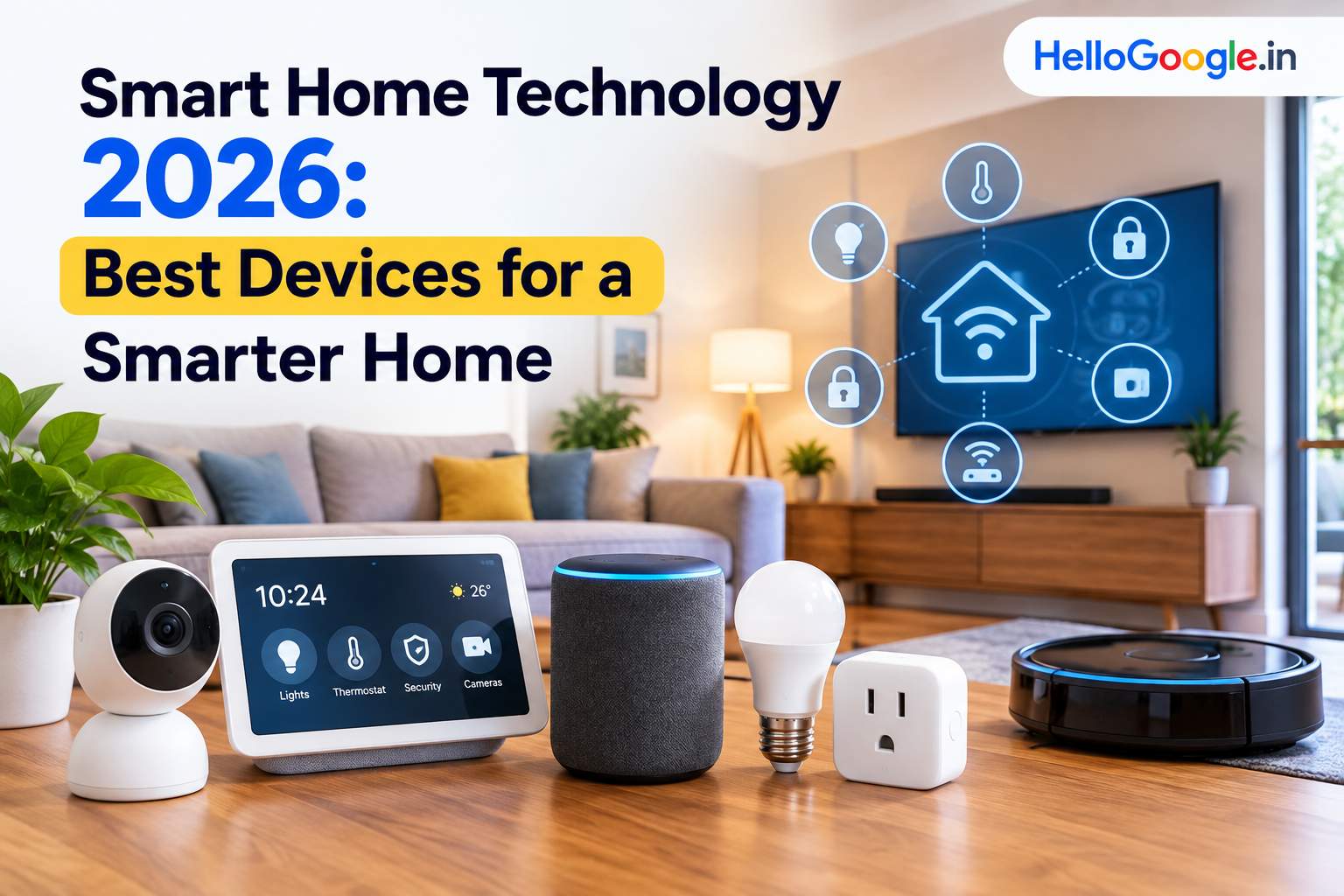
Smart Home Technology 2026: Best Devices for a Smarter Home
Smart home technology is changing the way people live, work, and manage their homes. From voice-controlled lights to smart security cameras, modern devices make everyday tasks easier, safer, and more convenient. In 2026, home automation is becoming more accessible, allowing homeowners to control different devices using smartphones, voice assistants, and automated routines.
Whether you live in an apartment, a family home, or a rented property, smart home devices can help improve comfort and efficiency. This guide explains what smart home technology is, the best devices to consider, its benefits, and how to create a smarter home.
What Is Smart Home Technology?
Smart home technology refers to connected electronic devices that allow you to monitor, control, and automate different functions in your home. These devices typically connect through Wi-Fi, Bluetooth, or other wireless technologies.
For example, a smart light bulb can be switched on using a mobile app, while a smart security camera can send notifications when it detects movement. Some devices can also work together to perform tasks automatically.
The Internet of Things (IoT) is an important part of smart home technology. It allows physical devices to communicate with each other and exchange information through a network.
How Does Smart Home Technology Work?
Smart home devices generally work through three main components:
1. Connected Devices
These include smart bulbs, thermostats, cameras, locks, plugs, and other electronic products. Each device performs a specific function.
2. Control System
A smartphone app, voice assistant, or compatible smart home hub allows users to control their devices.
3. Automation
Users can create schedules and routines. For example, lights can turn on automatically at sunset, or a smart plug can switch off at a particular time.
Some newer smart home systems can also use artificial intelligence to understand routines and make device control more convenient.
Top 10 Smart Home Devices in 2026
1. Smart Lighting
Smart bulbs and smart switches are among the easiest ways to start home automation. They allow users to control lights remotely, set schedules, and adjust brightness.
Many smart bulbs also support different colors, making them useful for bedrooms, living rooms, and entertainment areas.
Benefits:
- Remote control through a smartphone
- Automated lighting schedules
- Adjustable brightness
- Convenient control through compatible voice assistants
Smart lighting can also help reduce unnecessary electricity usage when lights are switched off automatically.
2. Smart Security Cameras
Home security is one of the most popular applications of smart home technology. Smart cameras allow homeowners to monitor their property using a mobile application.
Many models offer features such as motion detection, night vision, two-way audio, and mobile notifications.
Some cameras can distinguish between different types of movement, helping reduce unnecessary alerts.
Before purchasing a security camera, check its privacy settings, storage options, and whether recordings are encrypted.
3. Smart Door Locks
Smart door locks provide an alternative to traditional keys. Depending on the model, users may be able to unlock doors using a smartphone, PIN code, fingerprint, or compatible access method.
These locks can be useful for families, rental properties, and people who frequently need to provide temporary access to visitors.
However, smart locks should be installed correctly, and users should maintain a backup entry method in case of a power or connectivity problem.
4. Smart Speakers and Voice Assistants
Smart speakers allow users to control compatible devices through voice commands. They can also play music, set reminders, answer questions, and provide information.
For example, you might say, “Turn off the bedroom lights,” and a compatible smart speaker can send the command to the connected lighting system.
Voice assistants are especially useful for people who want hands-free control of their homes.
5. Smart Plugs
Smart plugs are affordable devices that can make ordinary appliances more convenient to use. They connect to a power socket and allow users to control compatible appliances through an app or automation routine.
Examples include lamps, fans, and other appliances that can safely operate with a simple on-and-off power connection.
Some smart plugs also provide energy monitoring, helping users understand how much electricity a connected appliance consumes.
6. Smart Air Conditioners and Thermostats
Smart air conditioners and thermostats help homeowners manage indoor temperature more conveniently.
Depending on the product, users may be able to:
- Adjust temperature remotely
- Set operating schedules
- Monitor energy consumption
- Control the device using a smartphone
In India, smart air conditioners can be particularly useful for managing cooling during hot weather.
Smart temperature controls may help reduce unnecessary energy use, although actual savings depend on the device, settings, weather, and usage habits.
7. Robot Vacuum Cleaners
Robot vacuum cleaners use sensors and navigation technology to move around rooms and clean floors automatically.
Some advanced models can map rooms, schedule cleaning sessions, and return to their charging stations when their battery is low.
They are useful for busy households and people who want to reduce the time spent on everyday cleaning.
Before buying one, check its ability to handle your floor type, carpets, furniture, and room layout.
8. Smart Doorbells
Smart video doorbells combine a doorbell with a camera and communication features. They can notify homeowners when someone approaches the entrance.
Many models allow users to view visitors and communicate with them through a smartphone.
These devices can improve convenience, especially when you are away from home.
Privacy is important, so users should check recording settings and local rules regarding cameras in shared or public areas.
9. Smart Sensors
Smart sensors help monitor conditions around the home. Common examples include motion sensors, door sensors, temperature sensors, and water-leak detectors.
A water-leak sensor can alert you when it detects moisture near a washing machine, sink, or water pipe. Motion sensors can also be used to trigger lights or security notifications.
Sensors are valuable because they allow smart home systems to respond automatically to changes in the environment.
10. Smart Energy Monitoring Devices
Smart energy monitors help homeowners understand electricity usage. Some smart plugs and energy-monitoring systems show how much power a device consumes.
This information can help identify appliances that use more electricity than expected.
Energy monitoring is especially useful for people who want to reduce electricity bills and improve their household energy habits.
Benefits of Smart Home Technology
Improved Convenience
Smart devices reduce the need to perform repetitive tasks manually. Users can control lights, appliances, and security systems from a smartphone or through automated routines.
Better Home Security
Smart cameras, door sensors, and doorbells can provide notifications about activity around the home. They can also help homeowners check their property remotely.
Energy Efficiency
Automation and energy monitoring can help reduce unnecessary electricity usage. For example, lights can be switched off automatically when they are not needed.
However, smart devices themselves consume electricity, so choosing efficient products and using sensible settings is important.
Increased Comfort
Smart lighting, temperature controls, and automated routines can make a home more comfortable.
For example, a user can schedule the air conditioner to start before arriving home or adjust bedroom lighting before bedtime.
Remote Monitoring
Smart home technology allows homeowners to check certain devices even when they are away. This can be useful for monitoring security cameras, checking sensors, or controlling compatible appliances.
Smart Home Technology for Indian Homes
Smart home automation is becoming increasingly relevant for Indian households. Many people are looking for affordable devices that can improve security, convenience, and energy management.
For beginners, smart bulbs, smart plugs, and security cameras are practical starting points.
Before purchasing a device, consider:
- Wi-Fi coverage in your home
- Compatibility with your smartphone
- Electricity consumption
- Installation requirements
- After-sales support
- Privacy and security features
For rented apartments, portable devices such as smart bulbs, plugs, and cameras may be easier to install than permanent smart switches or locks.
Smart Home Security and Privacy
Connected devices can collect information about your home, routines, and activities. This makes security and privacy important considerations.
Follow these steps to protect your smart home:
- Use strong, unique passwords for device accounts.
- Enable two-factor authentication whenever available.
- Keep device firmware and mobile apps updated.
- Use a secure home Wi-Fi network.
- Review camera recording and microphone permissions.
- Purchase devices from reliable manufacturers.
- Disable unnecessary features that you do not use.
If a device supports local control or local data storage, check whether those options meet your needs.
Future of Smart Home Technology
The future of smart home technology is expected to focus on better interoperability, more automation, and improved energy management.
AI-powered assistants may make it easier to control multiple devices using natural language. For example, a homeowner could ask the system to prepare the living room for movie night by adjusting compatible lights and entertainment devices.
Matter, an industry-supported smart home connectivity standard, is also designed to improve compatibility between supported devices and ecosystems. However, not every device supports every feature, so buyers should check compatibility before making a purchase.
Other developments may include better energy monitoring, improved home security, and more personalized automation.
How to Start Building a Smart Home
You do not need to purchase every smart device at once. A simple approach is to begin with one or two products that solve a specific problem.
For example:
Step 1: Start with smart lighting or a smart plug.
Step 2: Connect the device to your home Wi-Fi and mobile app.
Step 3: Create a basic schedule or automation routine.
Step 4: Add security cameras or sensors if needed.
Step 5: Expand your system gradually, checking compatibility before buying additional devices.
A well-planned smart home is not necessarily the one with the most devices. It is the one that makes everyday life easier without creating unnecessary complexity.
Frequently Asked Questions
1. What is smart home technology?
Smart home technology uses connected devices and automation to control and monitor different functions of a home.
2. Which smart home device should beginners buy first?
Smart bulbs and smart plugs are good starting points because they are relatively simple to install and use.
3. Is smart home technology expensive?
The cost depends on the number and type of devices you purchase. You can begin with affordable products and expand your system gradually.
4. Does smart home technology save electricity?
Smart devices can help reduce unnecessary energy usage through automation and monitoring. Actual savings depend on how the devices are used.
5. Is smart home technology safe?
Smart home devices can be safe when purchased from reliable manufacturers and configured with strong passwords, updated software, and appropriate privacy settings.
Conclusion
Smart home technology is transforming everyday living by making homes more connected, convenient, and manageable. From smart lighting and security cameras to automated cleaning and energy monitoring, there are many ways to improve your home with technology.
In 2026, homeowners can start small and gradually build a smart home that fits their budget and lifestyle. By choosing compatible devices and paying attention to security and privacy, you can enjoy the benefits of home automation while keeping your system practical and easy to manage.